×
- Hello
- Login or Register
- Quick Links
- Live Chat
- Track Order
- Parts Availability
- RMA
- Help Center
- Contact Us
- Shop for
- Nissan Parts
- Nissan Accessories

My Garage
My Account
Cart
Genuine 2005 Nissan Maxima Crankshaft
Crank Shaft- Select Vehicle by Model
- Select Vehicle by VIN
Select Vehicle by Model
orMake
Model
Year
Select Vehicle by VIN
For the most accurate results, select vehicle by your VIN (Vehicle Identification Number).
1 Crankshaft found
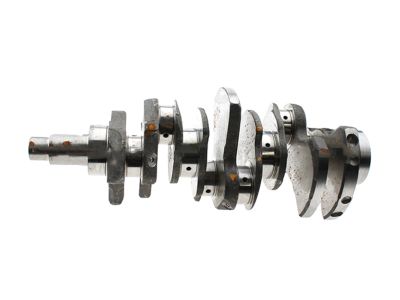
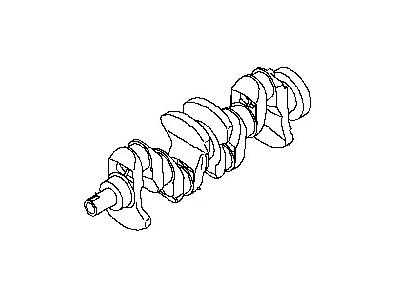
 Product Specifications
- Replaced by: 12200-7Y00B
- Lookup Code: 12200
- Item Weight: 67.70 Pounds
- Item Dimensions: 26.8 x 13.9 x 8.6 inches
- Condition: New
- Fitment Type: Direct Replacement
- SKU: 12200-7Y000
- Warranty: This genuine part is guaranteed by Nissan's factory warranty.
2005 Nissan Maxima Crankshaft
Committed to delivering top-notch quality at affordable prices, our website is your go-to source for OEM 2005 Nissan Maxima Crankshaft worldwide. Each of our genuine 2005 Nissan Maxima Crankshaft come with a manufacturer's warranty, so rest assured, quality and cost are covered. With us, you're making a smart choice that stands the test of time.
2005 Nissan Maxima Crankshaft Parts Questions & Experts Answers
- Q:How to check main bearing oil clearance and install the crankshaft on 2005 Nissan Maxima?Posted by Fabricio T.A:It's assumed that the engine block and crankshaft have been cleaned, inspected, and repaired or reconditioned. Position the engine on the stand with the crankcase facing up, then remove the main bearing cap bolts and lift out the bearing cap and brace assembly. If present, remove the original bearing inserts from the block and caps, wiping the bearing surfaces with a clean, lint-free cloth to ensure cleanliness. Clean the back sides of the new main bearing inserts and lay one in each main bearing saddle in the block, ensuring that any grooved inserts are installed correctly. Lay the other bearings from the set in the corresponding main bearing caps, making sure the tab on the bearing insert fits into the recess. The oil holes in the block must align with those in the bearing inserts, and no lubrication should be used at this time. Install the flanged thrust bearing in the appropriate cap and saddle for the engine type, then clean the bearing faces and crankshaft main bearing journals. Check or clean the oil holes in the crankshaft, as dirt can affect the new bearings. Once the crankshaft is clean, lay it in position in the main bearings without lubrication. The main bearing oil clearance must be checked before permanent installation, using pieces of Plastigage placed on each crankshaft main bearing journal. Clean the bearing faces in the cap and install the bearing caps and brace assembly with arrows pointing toward the drivebelt end, tightening the main bearing cap assembly bolts in three steps to the specified torque without rotating the crankshaft. After removing the bolts and lifting off the assembly, compare the width of the crushed Plastigage to the scale on the envelope to obtain the oil clearance, ensuring it meets specifications. If the clearance is incorrect, check for dirt or oil between the bearing inserts and caps or block before considering different inserts. Carefully scrape off any Plastigage material without damaging the bearing faces. For final crankshaft installation, lift the crankshaft out, install oil jets if applicable, and tighten the bolts. Clean the bearing faces in the block and apply a thin layer of moly-base grease or engine assembly lube to each bearing surface, including the thrust faces. Lay the crankshaft back in place, clean the bearing faces in the caps, and apply lubricant. Install the bearing caps and brace assembly with arrows pointing toward the drivebelt end, tightening the bolts to 10-to-12 ft-lbs. Gently tap the ends of the crankshaft to align the thrust surfaces, then retighten all main bearing cap bolts to the specified torque in the proper sequence. Rotate the crankshaft by hand to check for binding, and finally, check the crankshaft endplay with a feeler gauge or dial indicator, ensuring it is correct if the thrust faces are not worn and new bearings are installed. Install the new seal and bolt the retainer to the block.Answered by Nissan Parts Specialist Martin / Oct 01, 2025
Related 2005 Nissan Maxima Parts
 2005 Nissan Maxima Oil Pump Gasket
 2005 Nissan Maxima Oil Pan Gasket
 2005 Nissan Maxima Rod Bearing
 2005 Nissan Maxima Oil Pan
 2005 Nissan Maxima Piston Ring Set
 2005 Nissan Maxima Crankshaft Gear
 2005 Nissan Maxima Oil Pump
 2005 Nissan Maxima Cam Gear
 2005 Nissan Maxima Camshaft
 2005 Nissan Maxima Crankshaft Pulley
 2005 Nissan Maxima Crankshaft Thrust Washer Set