×
- Hello
- Login or Register
- Quick Links
- Live Chat
- Track Order
- Parts Availability
- RMA
- Help Center
- Contact Us
- Shop for
- Nissan Parts
- Nissan Accessories

My Garage
My Account
Cart
Genuine 2012 Nissan Altima Car Batteries
Auto Battery- Select Vehicle by Model
- Select Vehicle by VIN
Select Vehicle by Model
orMake
Model
Year
Select Vehicle by VIN
For the most accurate results, select vehicle by your VIN (Vehicle Identification Number).
1 Car Batteries found
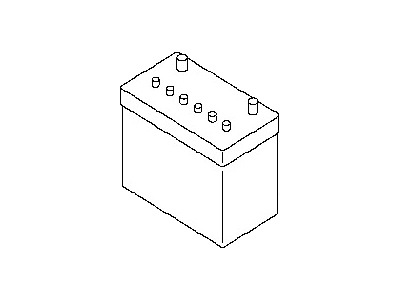
 Product Specifications
- Lookup Code: 24410
- Condition: New
- Fitment Type: Direct Replacement
- SKU: 24410-JA10A
- Warranty: This genuine part is guaranteed by Nissan's factory warranty.
2012 Nissan Altima Car Batteries
Committed to delivering top-notch quality at affordable prices, our website is your go-to source for OEM 2012 Nissan Altima Car Batteries worldwide. Each of our genuine 2012 Nissan Altima Car Batteries come with a manufacturer's warranty, so rest assured, quality and cost are covered. With us, you're making a smart choice that stands the test of time.
2012 Nissan Altima Car Batteries Parts Questions & Experts Answers
- Q:What essential precautions should you take during a routine preventive maintenance program for your 2012 Nissan Altima's car batteries?Posted by Emanuel A.A:Preventive maintenance of the battery in a vehicle is recommended for fast, and dependable starts, and the following precautions need to be observed during the maintenance. It is advisable to always stop the engine and all electrical load circuits, and remove the ignition key and the battery connection cable then move it from the negative terminal. Hydrogen gas is flammable and explosive in nature, which is produced by the battery; therefore, do not expose it to fire, cigarettes, or matchsticks and charge the battery in an area with proper ventilation. Electrolyte includes deadly and corrosive sulfuric acid, thus protective safety glasses should be worn, and also the substance should not come in contact with skin, eyes, or mouth. The external features should also be looked at with an aim of examining the general health of the battery especially with regards to the condition of the positive terminal and cable clamp which should not have signs of damage, corrosion or be loose or cracked. If corrosion is detected remove the battery to clean, start with the ground cable then clean the cable clips with warm water and baking soda avoiding this getting into the battery. Battery tray should be a smart, well-maintained, strong, solid, and hold-down clamp should be properly tightened but not too much. Contaminated zones are also washable with this solution and any affected metal substrate has to be coated with zinc base paint and primer. For charging slow rate charging is preferred when the battery is virtually dead and for winter where the battery goes through pressure. A one or two-amp charger is perfect as anything more than that is not recommended; charges with higher amperage should not be more than 1/10 of the AH rating of the battery and rapid boost charges are recommended only in cases of emergencies. A trickle charger normally charges a battery very slowly, and this may even take 12-16 hours.Answered by Nissan Parts Specialist Timothy / May 23, 2025
