×
- Hello
- Login or Register
- Quick Links
- Live Chat
- Track Order
- Parts Availability
- RMA
- Help Center
- Contact Us
- Shop for
- Nissan Parts
- Nissan Accessories

My Garage
My Account
Cart
Genuine 2016 Nissan Rogue Brake Booster
Brake Power Booster- Select Vehicle by Model
- Select Vehicle by VIN
Select Vehicle by Model
orMake
Model
Year
Select Vehicle by VIN
For the most accurate results, select vehicle by your VIN (Vehicle Identification Number).
5 Brake Boosters found
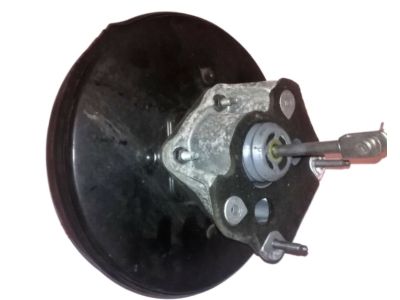
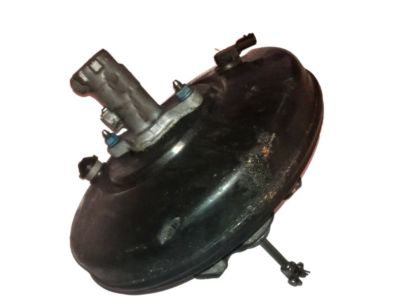
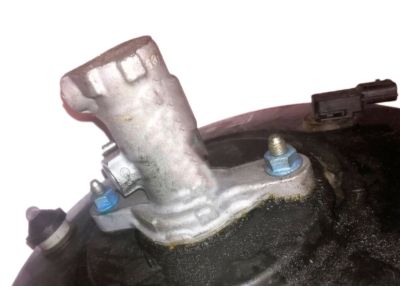
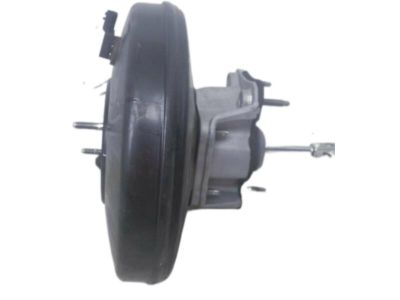
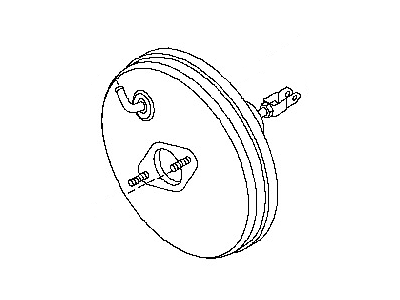
2016 Nissan Rogue Brake Booster
Part Number: 47210-4CU0A$264.83 MSRP: $392.13You Save: $127.30 (33%)Ships in 1-3 Business DaysProduct Specifications- Other Name: Booster Assembly - Brake; Booster, Brake Booster
- Lookup Code: 47210
- Item Weight: 7.80 Pounds
- Item Dimensions: 21.0 x 14.8 x 14.3 inches
- Condition: New
- Fitment Type: Direct Replacement
- SKU: 47210-4CU0A
- Warranty: This genuine part is guaranteed by Nissan's factory warranty.
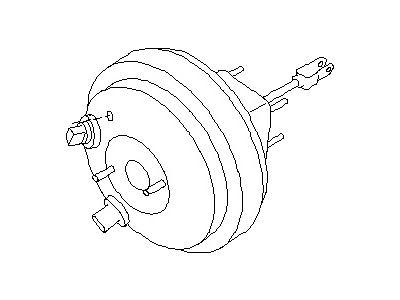
2016 Nissan Rogue Brake Booster Assembly
Part Number: 47210-4EH0J$324.56 MSRP: $495.37You Save: $170.81 (35%)Ships in 1-3 Business DaysProduct Specifications- Other Name: Booster Assembly - Brake
- Lookup Code: 47210
- Item Weight: 8.30 Pounds
- Item Dimensions: 11.6 x 14.2 x 14.9 inches
- Condition: New
- Fitment Type: Direct Replacement
- SKU: 47210-4EH0J
- Warranty: This genuine part is guaranteed by Nissan's factory warranty.
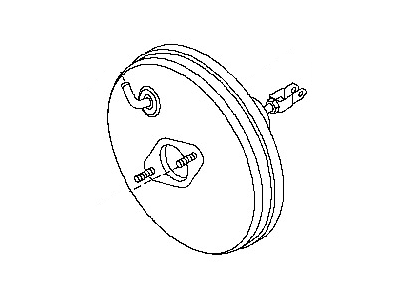
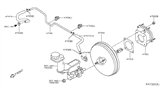
2016 Nissan Rogue Brake Booster
Part Number: D7210-4BA0A$744.64 MSRP: $1145.32You Save: $400.68 (35%)Ships in 1-3 Business DaysProduct Specifications- Other Name: Booster Assembly - Brake; Booster, Brake Booster
- Manufacturer Note: LABEL 46007-4BA2A
- Replaces: 47210-4BA0A
- Lookup Code: 47210
- Item Weight: 8.20 Pounds
- Item Dimensions: 14.9 x 13.8 x 13.3 inches
- Condition: New
- Fitment Type: Direct Replacement
- SKU: D7210-4BA0A
- Warranty: This genuine part is guaranteed by Nissan's factory warranty.
2016 Nissan Rogue Brake Booster Assembly
Part Number: 47210-4BA0A$744.64 MSRP: $1145.32You Save: $400.68 (35%)Ships in 1-3 Business DaysProduct Specifications- Other Name: Booster Assembly - Brake
- Replaced by: D7210-4BA0A
- Lookup Code: 47210
- Item Weight: 7.80 Pounds
- Item Dimensions: 13.7 x 13.3 x 15.2 inches
- Condition: New
- Fitment Type: Direct Replacement
- SKU: 47210-4BA0A
- Warranty: This genuine part is guaranteed by Nissan's factory warranty.
- Product Specifications
- Other Name: Booster Assy-Brake
- Lookup Code: 47210
- Condition: New
- Fitment Type: Direct Replacement
- SKU: D7210-4BA0D
- Warranty: This genuine part is guaranteed by Nissan's factory warranty.
2016 Nissan Rogue Brake Booster
Committed to delivering top-notch quality at affordable prices, our website is your go-to source for OEM 2016 Nissan Rogue Brake Booster worldwide. Each of our genuine 2016 Nissan Rogue Brake Booster come with a manufacturer's warranty, so rest assured, quality and cost are covered. With us, you're making a smart choice that stands the test of time.
2016 Nissan Rogue Brake Booster Parts Questions & Experts Answers
- Q:What are the key steps and checks for inspecting and maintaining the brake system, including brake pads, discs, brake lines and brake booster on 2016 Nissan Rogue?Posted by Bridget K.A:Besides the mentioned intervals, the brakes must be checked whenever the wheels are off or a defect is suspected and the signs of brake system defects are vehicle pulling to the side when the brake pedal is pressed, squeaking or grinding noises while applying the brakes, spongy or ultra-hard brake pedal, brake shake and brake fluid leakage. The disc brake pads have wear indicators that when worn out they make a loud squealing or scraping sound that alerts the driver to get a new pad to avoid a costly next step where the pad wears out completely and damages the disc. First, turn the wheel lug nuts counterclockwise to loosen them; after this, safely jack up the car and prop it up with jack stands and then remove the wheels. Every caliper has an outer and an inner pads and through observation windows the thickness of the pad material can be ascertained; in case the thickness of the lining material is less than the stipulated thickness the pads have to be changed. If measuring this distance is not possible, then it is best to proceed with the removal of the caliper(s) and pad(s) for examination. If the pads require cleaning after removing the lids and before reinstalling the lids back to the master cylinder, clean them with brake cleaner then measure them and check the disc thickness with micrometer to determine if it has service life remaining or not, Discs that are thinner than 0.030 inch "0.760mm should be replaced while on cases of scoring, gouging or burned spot the disc should be resurface. Before fitting the wheels, it is necessary to check all brake hoses and tubes on mechanical damages, wear and leakage, especially through rubber tubes on the caliper part, and all hoses and tubes should be free from sharp edges and moving parts, making the corresponding repairs or replacing if necessary. To check the brake booster, sit in the driver's seat and perform a series of tests: apply the brake and engage the engine with the brake fully depressed to check if it moves slightly down then apply the brake pedal several time to confirm that the travel distance is not affected. According to the state of the brake booster, if the above operations are performed, the pedal should not fall or float, and when the engine is started again and the brake is depressed several times with considerable force, the pedal travel should decrease with each application; if it does not work according to the description above, it may be necessary to repair or replace the brake booster. For the parking brake, apply normally and turn the adjusting nut slowly, counting the clicks to make sure it is set correctly; if the number of clicks is off, adjustment must be made. However, merely putting the parking brake on, setting the transaxle in NEUTRAL, and finding a steep incline to park the vehicle will accomplish this if the vehicle rolls, adjustments are necessary.Answered by Nissan Parts Specialist Jim / Jun 17, 2025
Related 2016 Nissan Rogue Parts
 2016 Nissan Rogue Brake Fluid Pump
 2016 Nissan Rogue Brake Master Cylinder
 2016 Nissan Rogue Brake Fluid Level Sensor