×
- Hello
- Login or Register
- Quick Links
- Live Chat
- Track Order
- Parts Availability
- RMA
- Help Center
- Contact Us
- Shop for
- Nissan Parts
- Nissan Accessories

My Garage
My Account
Cart
Genuine 2018 Nissan Versa Car Batteries
Auto Battery- Select Vehicle by Model
- Select Vehicle by VIN
Select Vehicle by Model
orMake
Model
Year
Select Vehicle by VIN
For the most accurate results, select vehicle by your VIN (Vehicle Identification Number).
2 Car Batteries found
2018 Nissan Versa Entry Card Battery
Part Number: 28599-C9900$16.02 MSRP: $24.09You Save: $8.07 (34%)Ships in 1 Business DayProduct Specifications- Other Name: Battery - Entry Card; Battery
- Replaced by: B8599-C1620
- Lookup Code: 28599
- Item Weight: 0.20 Pounds
- Item Dimensions: 0.5 x 0.5 x 0.3 inches
- Condition: New
- Fitment Type: Direct Replacement
- SKU: 28599-C9900
- Warranty: This genuine part is guaranteed by Nissan's factory warranty.
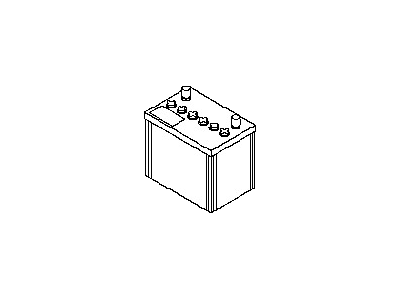
 Product Specifications
- Lookup Code: 24410
- Condition: New
- Fitment Type: Direct Replacement
- SKU: 24410-ZW90A
- Warranty: This genuine part is guaranteed by Nissan's factory warranty.
2018 Nissan Versa Car Batteries
Committed to delivering top-notch quality at affordable prices, our website is your go-to source for OEM 2018 Nissan Versa Car Batteries worldwide. Each of our genuine 2018 Nissan Versa Car Batteries come with a manufacturer's warranty, so rest assured, quality and cost are covered. With us, you're making a smart choice that stands the test of time.
2018 Nissan Versa Car Batteries Parts Questions & Experts Answers
- Q:How to perform routine preventive maintenance program for your 2018 Nissan Versa's car batteries?Posted by Can T.A:It is absolutely important to have a routine preventive measure when it comes to your battery systems in your automobiles to be able to have quick and Responsive startups, Correct equipment for handling battery is important. Measures include engaging the emergency brake and all other switching, avoiding the back-projection of rays or entering the pit while the engine is running, not touching any terminal, especially the negative one prior to the servicing. The battery generates flammable hydrogen gas, any sparks, smoking or lighting match near that battery is not allowed and charge your battery in fresh air. Electrolyte also has corrosive sulfuric acid, protective goggles are recommended and it should not come into contact with skin, eyes, and mouth. Visually review the condition of the battery's exterior and look at the positive terminal and cable clamp for any dullness, discoloration, flaking or powder, or any signs of corrosion or loose ends or cracks on the battery casing or on the terminal. If corrosion is present, then the battery should be disconnected for cleaning: first, the ground cable; second, cable clamps should be cleaned using warm water with baking soda, but this liquid should not get into the battery. Battery tray should be fine, hold-down clamp should be tightened firmly but not too tight as to damage the battery tray. Corrosion may be washed with solution of water and baking soda, while any metals that were affected should be primed with zinc and painted. For charging, slow-rate charging should be observed to recharge a discharged battery most of the time and especially during winter using a one or two-amp charger as a best option. Higher amperage chargers can be used carefully and but fast boost charges should be used sparingly, especially if the battery is in a bad state. The charging time is normally described in the instructions to the charger, but for trickle charger, it will take about 12-16 hours to a battery.Answered by Nissan Parts Specialist Randy / Jan 29, 2026
