×
- Hello
- Login or Register
- Quick Links
- Live Chat
- Track Order
- Parts Availability
- RMA
- Help Center
- Contact Us
- Shop for
- Nissan Parts
- Nissan Accessories

My Garage
My Account
Cart
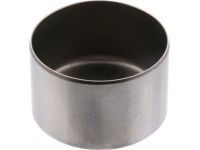
Genuine Nissan Juke Lash Adjuster
Lash Adjuster Lifter- Select Vehicle by Model
- Select Vehicle by VIN
Select Vehicle by Model
orMake
Model
Year
Select Vehicle by VIN
For the most accurate results, select vehicle by your VIN (Vehicle Identification Number).
53 Lash Adjusters found
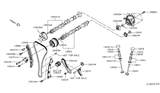
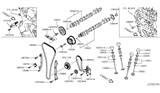
Nissan Juke Valve Lifters
Part Number: 13231-1KC6E$49.48 MSRP: $68.22You Save: $18.74 (28%)Ships in 1-2 Business Days
Nissan Juke Valve Lifters
Part Number: 13231-1KC4A$33.02 MSRP: $45.52You Save: $12.50 (28%)Ships in 1-3 Business DaysNissan Juke Valve Lifters
Part Number: 13231-1KC3B$39.59 MSRP: $54.58You Save: $14.99 (28%)Ships in 1-3 Business Days
Nissan Juke Lifter-Valve
Part Number: 13233-1KC4E$18.73 MSRP: $25.82You Save: $7.09 (28%)Ships in 1-3 Business DaysNissan Juke Lifter-Valve
Part Number: 13233-1KC1E$20.53 MSRP: $28.30You Save: $7.77 (28%)Ships in 1-3 Business DaysNissan Juke Lifter-Valve
Part Number: 13233-1KC2E$20.40 MSRP: $28.12You Save: $7.72 (28%)Ships in 1-3 Business DaysNissan Juke Lifter-Valve
Part Number: 13233-1KC3E$20.90 MSRP: $28.82You Save: $7.92 (28%)Ships in 1-3 Business DaysNissan Juke Lifter-Valve
Part Number: 13233-1KC0E$20.90 MSRP: $28.82You Save: $7.92 (28%)Ships in 1-3 Business DaysNissan Juke Valve Lifters
Part Number: 13231-1KC1E$30.08 MSRP: $41.47You Save: $11.39 (28%)Ships in 1-3 Business DaysNissan Juke Valve Lifters
Part Number: 13233-1KC4C$31.06 MSRP: $42.82You Save: $11.76 (28%)Ships in 1-3 Business DaysNissan Juke Valve Lifters
Part Number: 13233-1KC0D$31.06 MSRP: $42.82You Save: $11.76 (28%)Ships in 1-3 Business DaysNissan Juke Valve Lifters
Part Number: 13233-1KC0C$31.06 MSRP: $42.82You Save: $11.76 (28%)Ships in 1-3 Business DaysNissan Juke Valve Lifters
Part Number: 13233-1KC0B$31.06 MSRP: $42.82You Save: $11.76 (28%)Ships in 1-3 Business DaysNissan Juke Valve Lifters
Part Number: 13231-1KC4E$31.06 MSRP: $42.82You Save: $11.76 (28%)Ships in 1-3 Business DaysNissan Juke Valve Lifters
Part Number: 13231-1KC4C$31.06 MSRP: $42.82You Save: $11.76 (28%)Ships in 1-3 Business Days
Nissan Juke Valve Lifters
Part Number: 13231-1KC0B$31.06 MSRP: $42.82You Save: $11.76 (28%)Ships in 1-3 Business DaysNissan Juke Valve Lifters
Part Number: 13233-1KC4B$32.46 MSRP: $44.75You Save: $12.29 (28%)Ships in 1-3 Business DaysNissan Juke Valve Lifters
Part Number: 13233-1KC4A$32.46 MSRP: $44.75You Save: $12.29 (28%)Ships in 1-3 Business DaysNissan Juke Valve Lifters
Part Number: 13231-1KC4D$33.02 MSRP: $45.52You Save: $12.50 (28%)Ships in 1-3 Business DaysNissan Juke Valve Lifters
Part Number: 13233-1KC3B$33.33 MSRP: $45.95You Save: $12.62 (28%)Ships in 1-3 Business Days
| Page 1 of 3 |Next >
1-20 of 53 Results
Nissan Juke Lash Adjuster
The Nissan Juke Lash Adjuster maintains engine quietness and efficiency by automatically adjusting the slight gap between each cam lobe and its corresponding valve. The Lash Adjuster acts sufficiently like a small hydraulic pump that fills with pressurized oil, expands just the right amount, and eliminates clearance that causes ticking noise and faster wear. The first Juke engines applied Lash Adjuster units of solid style that needed manual shimming from time to time as they could not adjust for heat expansion. Subsequent variants embraced the hydraulic Lash Adjuster, a self-dependent device that operates to simultaneously regulate the gap while the engine runs and does away with owners' scheduled valve lash jobs. Certain models additionally feature a roller tip, allowing the valve train to glide across the cam profile with diminished friction for improved efficiency and durability. Nissan's recent improvements also enhance oil channels for better priming. The mission of all types of Lash Adjusters, whether solid, hydraulic, or hydraulic roller, is the same: to lift the valves at the correct point and height so that the air-fuel flow remains accurate. As a result of these enhancements, Nissan engines in the Juke offer smoother performance, longer component life, and reduced noise. The Lash Adjuster is crucial for maintaining optimal engine function.
If you need any OEM Nissan Juke Lash Adjuster, feel free to choose them out of our huge selection of genuine Nissan Juke Lash Adjuster. All our parts are offered at unbeatable prices and are supported by the manufacturer's warranty. In addition, we offer quick shipping to have your parts delivered to your door step in a matter of days.
Nissan Juke Lash Adjuster Parts Questions & Experts Answers
- Q:How to properly remove, inspect, and refit the camshaft and Lash Adjusters during a cylinder head overhaul on 1.5L diesel Nissan Juke?Posted by Wadiel R.A:A new camshaft oil seal and appropriate sealant to fix the new bearing caps for the camshaft and Cylinder head cover are required. This is usually required for the lash adjusters or completely during the overhaul of the cylinder head where the head, cylinder head cover, camshaft sprocket, brake vacuum pump are removed. The temper of the camshaft is ascertained with a dial gauge ending on the camshaft thrust washers which shows the wear. If the initial camshaft is going to be reused, valve clearances should be checked so that the desired adjuster thicknesses are taken as required. It should be remembered that such features as identification marks on the camshaft bearing caps must be matched when reinstalling; the bearing cap bolts must be gradually loosened to eliminate pressure on the valve springs. The camshaft can then be lifted out along with the oil seal, which proved to have to be removed as well. Lash adjusters need to be stored so they can easily be put back on and any wrong valve clearances need to have the adjuster thickness measured. Indeed, such features as cam bearing surfaces, lobes, cam, and shaft must be inspected for damages and wear, checking the camshaft run out and lobe height. It is also necessary to check the bearing oil clearance and re-attach the bearing caps with identification marks and tightened bolts to the corresponding torque. If any one journal is worn beyond the limits, the cylinder head must be replaced. The lash adjusters should be oiled and re-installed back in their prior positions; the next step is to oil the camshaft journals before fitting the camshaft onto the cylinder head. Before fitting the bearing caps or tightening the bolts, the sealant must be applied to the end cam shaft bearing cap contact surfaces. When a new camshaft is installed, end float has to be checked and adjusted by turning the camshaft sprocket after which, the oil seal is fitted new, finally the brake vacuum, the camshaft sprocket, and the cylinder head cover are reinstalled.Answered by Nissan Parts Specialist Jorge / Sep 28, 2022