×
- Hello
- Login or Register
- Quick Links
- Live Chat
- Track Order
- Parts Availability
- RMA
- Help Center
- Contact Us
- Shop for
- Nissan Parts
- Nissan Accessories

My Garage
My Account
Cart
Genuine Nissan Titan CV Boot
Axle Boot- Select Vehicle by Model
- Select Vehicle by VIN
Select Vehicle by Model
orMake
Model
Year
Select Vehicle by VIN
For the most accurate results, select vehicle by your VIN (Vehicle Identification Number).
7 CV Boots found
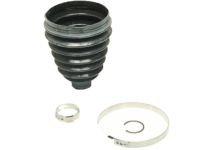
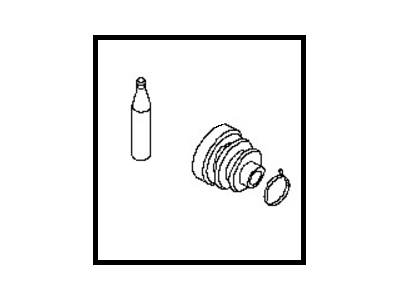
Nissan Titan Inner Boot
Part Number: C9241-1LB0J$84.91 MSRP: $119.93You Save: $35.02 (30%)Ships in 1-3 Business Days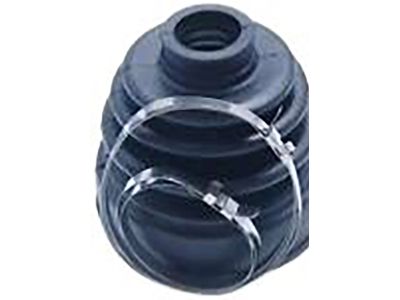
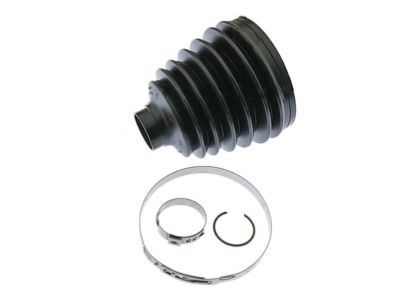
Nissan Titan Inner Boot
Part Number: C9741-7S01J$87.00 MSRP: $122.88You Save: $35.88 (30%)Ships in 1-2 Business Days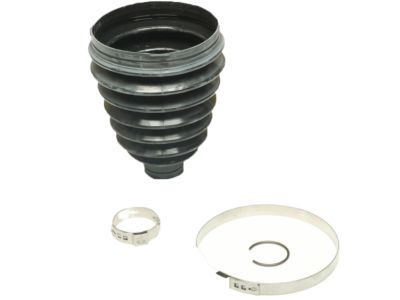
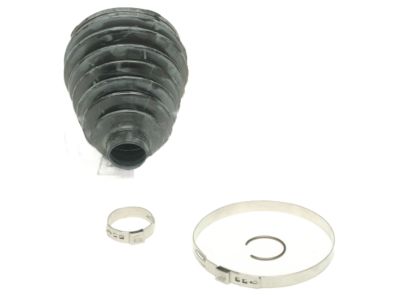
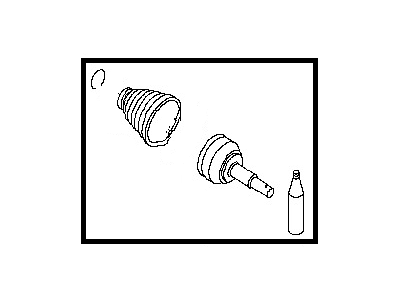
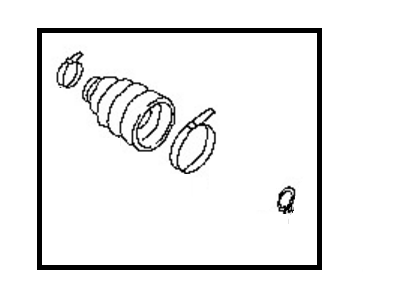
Nissan Titan Outer Boot
Part Number: 39241-8J126$46.68 MSRP: $64.34You Save: $17.66 (28%)Ships in 1-2 Business Days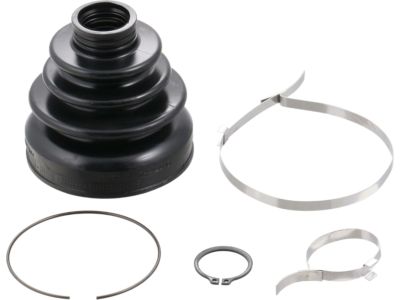
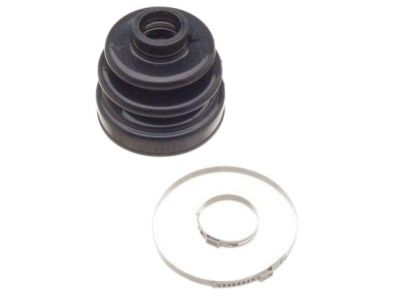
Nissan Titan Inner Boot
Part Number: 39741-7S026$124.89 MSRP: $176.40You Save: $51.51 (30%)Ships in 1-3 Business DaysNissan Titan Inner Boot
Part Number: C9741-7S000$80.46 MSRP: $113.65You Save: $33.19 (30%)Ships in 1-3 Business DaysNissan Titan Outer Boot
Part Number: C9241-8J100$99.32 MSRP: $140.28You Save: $40.96 (30%)Ships in 1-3 Business Days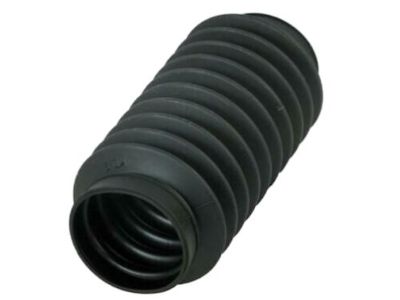
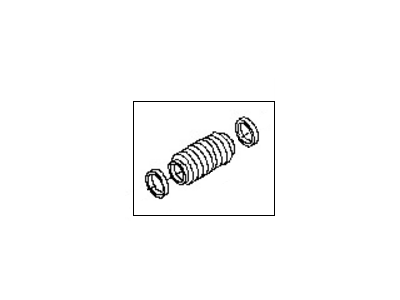
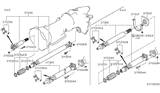
Nissan Titan CV Boot
The flexible Nissan Titan CV Boot covers and protects the constant velocity joint on the front drive axle, keeping the lubricant in and dirt, water, and road debris out of the moving parts. The CV Boot is manufactured using durable rubber or plastic. Furthermore, it expands and contracts when the suspension moves and wheels turn. This allows the joint to smoothly transmit power without losing grease. It is able to bend without breaking because of its pleated type folds. Therefore, the joint is able to deal with the up-and-down movement commonly imposed on Nissan trucks as well as the steering angles applied on Titan models. In classic Nissan fashion, the Titan assembly employs this protective shield to ensure consistent torque delivery across varying wheel positions. By living in a clean sealed environment, the CV Boot is capable of limiting damage to internal bearings and maintaining the special grease. This part is standard equipment on Nissan four-wheel drive layouts because constant velocity joints on the front halfshafts deliver reliable torque to the wheels. The Titan drivetrains benefit from this with quiet and efficient operations because the CV Boot keeps contamination out and lubrication in. The CV Boot is essential for maintaining the performance of the vehicle.
If you need any OEM Nissan Titan CV Boot, feel free to choose them out of our huge selection of genuine Nissan Titan CV Boot. All our parts are offered at unbeatable prices and are supported by the manufacturer's warranty. In addition, we offer quick shipping to have your parts delivered to your door step in a matter of days.
Nissan Titan CV Boot Parts Questions & Experts Answers
- Q:How to check the steering linkage, suspension components, CV Boot and shock absorbers on Nissan Titan?Posted by Waldemar L.A:The suspension and steering components need to be checked from time to time. Abnormal tire wear or excess worn suspension and steering linkage components generally lead to poor ride quality, excessive and abnormal tire wear, reduced fuel economy and poor vehicle handling. Check the shock absorbers by parking the car on a flat surface, turning off the engine, putting on the brake. Push it down at one corner of the vehicle then release, noting how far it bounces up and down. It should stop moving after one or two bounces and come to rest levelly in a flat position. If it continues movements up-and-down or fails to return to its resting position, then a worn out or weak shock absorber may be involved. Repeat this test on all the remaining three corners of the vehicle. Raise and hold the car with jack stands for evidence of leakage from the shock absorbers. Also check that they are well fixed plus in good condition. It is also important that you visually inspect all your steering and suspension parts for any damage such as leaks, distortion seals boots and bushings. Examine control arm bushings where they attach to chassis, look over tie rod ends and ball joints, inspect steering gear boots for cracks or fluid leakage. Clean the bottom part of the knuckle joint while an assistant turns the wheel inwards against it; this is done as a test for movement at this joint which is between these two suspensions parts if any movement is detected as such then either one will have failed hence must be replaced. Hold each front wheel at both front edges like gripping a steering wheel, and push in front and pull backwards, then feel any looseness in steering system parts. In case play occurs in those linkages, the idler arm and outer tie rod ends should be inspected before examining anything else concerning them. Check CV boots for tears, cuts, loose clamps since they prevent dirt, water, and foreign materials from destroying constant velocity (CV) joints. If lubricating oil is leaking or broken, replace boots.Answered by Nissan Parts Specialist Brian / Sep 23, 2025