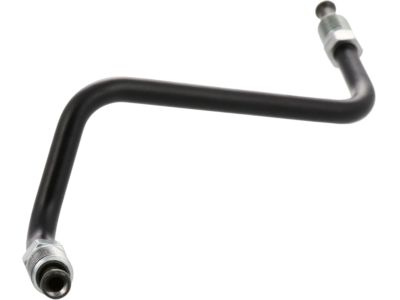
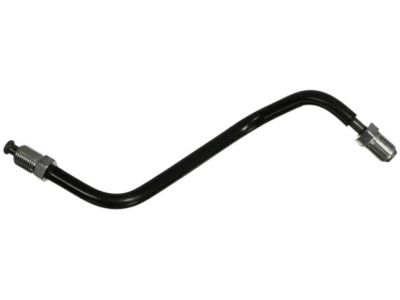
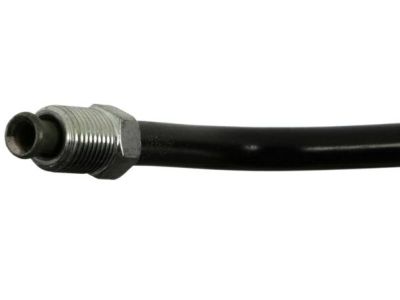
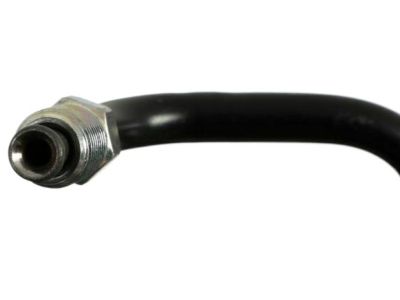
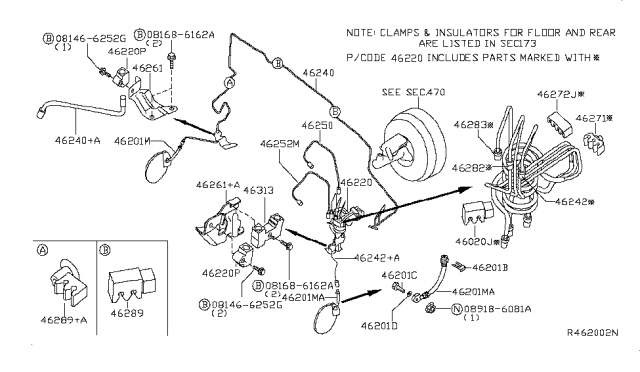
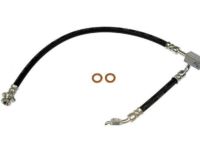
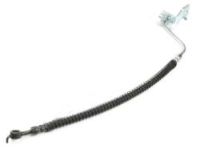
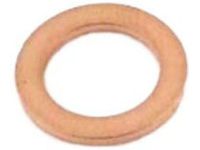
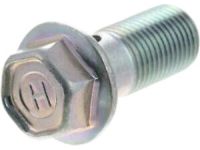
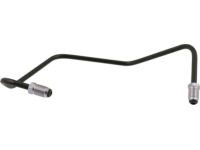
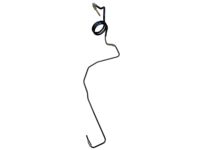
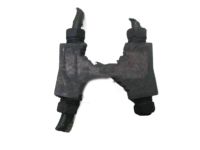
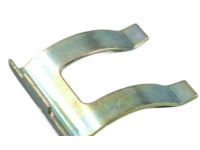
Once every six months, with the car raised and held up by jackstands, test the rubber hoses between steel brake lines and wheel and brake parts for splits, rubbing, wetness, bubbles, and breaks, as these brake parts are weak and easily damaged. Replace old, worn hoses with new ones immediately when you see them. To change broken front flexible brake hoses, loosen the wheel's bolts, lift the car, and take off the wheel. Loosen and remove the flare-nut wrench fitting from the brake hose at the frame bracket, then pull off the hose bracket attached to the steering knuckle. Pull out the U-clip from its place on the arm holding the hose, then move the hose through this gap. First, remove the bolt from the inlet at the caliper end, then separate the hose from the component and toss out the old copper seals. Place the new hose on the caliper and thread the inlet fitting bolt through with fresh sealant washers. Tighten the bolt to the recommended torque. Put the hose into the frame bracket, straighten it out, join the brake line adapter, put the U-clip on, and fasten everything tight. Then put the wheel in place on the tire, attach the lug nuts, let the car down, and snug up the lug nuts to their proper torque setting. Keep the car lifted and secure with jackstands on both sides, making sure the front wheels can't move. Remove the female fitting on the hose at the rear axle housing by unscrewing the brake line fitting with a flare-nut wrench. Take out the U-clip from the bracket's fitting, and guide the hose into place. For Titans, detach the brake hose from the caliper, and detach both rigid brake line connections at the rear axle housing bracket. Following replacing these parts, reinstall lug nuts. During installation, we always put fresh washers over the fitting seals. When changing the brake lines, install them with the right steel tools and never put in copper sections instead. Pre-cut brake lines with tips already on come ready to install, but need to be shaped the right way with a bent tool that applies lubrication. Mount and fix the new pipe in bracket positions, making sure it stays put and leaves enough space from moving or hot engine pieces. First, inspect and top up the fluid in the master cylinder, then purify the braking system, and finally, carefully test your brakes before driving again.