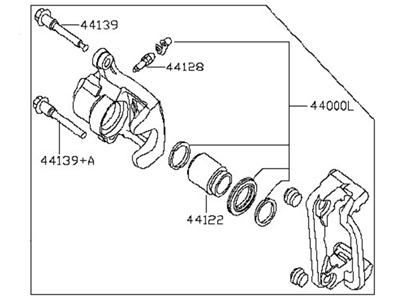
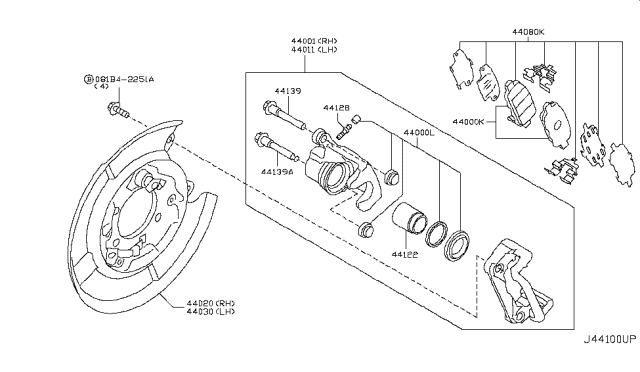
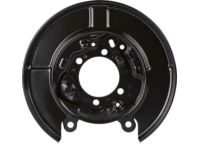
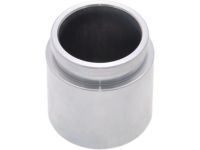
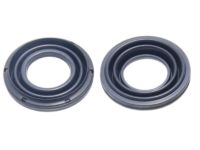
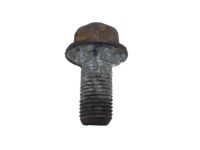
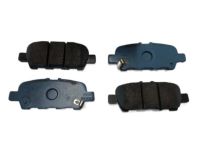
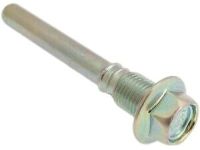
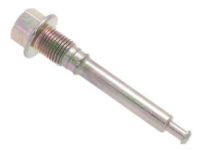
Chock the front wheels, then jack up the rear of the vehicle and support it securely on axle stands before removing the appropriate rear roadwheel. To minimize fluid loss during the following operations, remove the master cylinder reservoir cap and tighten it down onto a piece of polythene for an airtight seal, or use a brake hose clamp, G-clamp, or similar tool to clamp the flexible hose running to the caliper. Clean the area around the fluid hose union on the caliper, then unscrew the hose union banjo bolt, recovering the two sealing washers and noting that new washers will be required for refitting. Cover the open ends of the banjo and the caliper to prevent dirt ingress, then remove the brake pads. Lift the caliper and slide the upper guide pin bolt from the mounting bracket, unscrewing it from the caliper if necessary, and withdraw the caliper from the mounting bracket. If desired, unbolt the caliper mounting bracket from the trailing arm. Where applicable, refit the caliper mounting bracket to the hub carrier and tighten the mounting bolts to the specified torque. Place the caliper in position, refit the upper guide pin bolt, and tighten it to the specified torque before refitting the brake pads. Check that the caliper slides smoothly on the mounting bracket and that the brake fluid hose is correctly routed without being twisted, then reconnect the union to the caliper. Refit the union banjo bolt using two new sealing washers and tighten to the specified torque. Remove the polythene from the master cylinder reservoir cap or the clamp from the fluid hose as applicable, then bleed the hydraulic fluid circuit, noting that if no other part of the system has been disturbed, it should only be necessary to bleed the relevant rear circuit. Depress the brake pedal repeatedly to bring the pads into contact with the brake disc and ensure that normal pedal pressure is restored before refitting the roadwheel and lowering the vehicle to the ground.