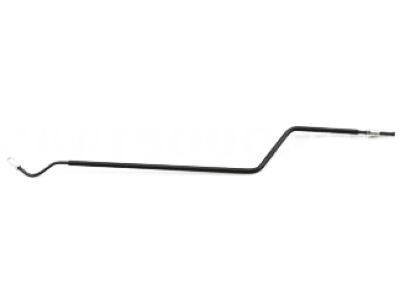
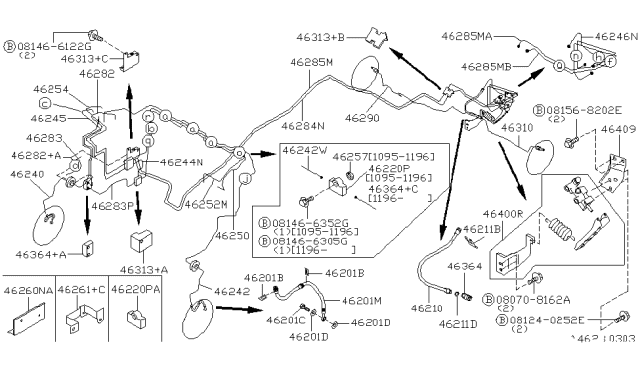
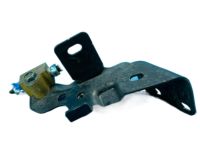
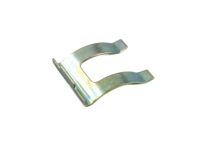
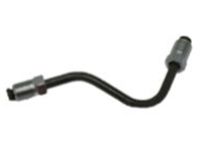
Every six months, lift your car up with jackstands, find any rubber tubes between the brake lines and brake parts, and check they are in good shape - no cracks, cuts, weeping, swollen spots, or other issues. When you see any issue with the hoses, remove and install brand new parts immediately. To change the flexible brake hose found at the front, loosen the wheel lug nuts, lift the car, and take out the wheel. To fix the hose link, first use a flare-nut wrench to unscrew the brake line fitting from the hose. Then clip off the rubber U-connection on the hose's metal end and undo the hose from the bracket sustaining the strut. In front, take out the threaded bolt at the caliper end, disconnect the hose from the caliper, and insert new copper sealing washers when you put it back together. Guide the new hose through the strut bracket, add the inlet fitting bolt and sealing washers in the caliper connection, and make sure there's no twisted hose between the frame mounting point. Place the wheel back on the car, screw the lug nuts in, let the vehicle go down, then fully tighten the lug nuts. Open the rear of the vehicle, jack up, block the front wheels, turn off the brake line fitting near the chassis bracket, and remove it. Disconnect the U-clip, loosen the two brake line fittings at the axle, and take out the hose. Start by undoing rear brake bleeds, then do the reverse steps to put in the new hose. When changing brake lines made of metal, only use approved steel parts and leave copper tubing out. You can buy ready-made brake lines, but they will need to be bent into just the right form before installation. Keep the new line stable, with enough space between itself and components that could slide or stay hot. When work is done, check, refill, bleed, then test brake performance before taking the car on the road.