×
- Hello
- Login or Register
- Quick Links
- Live Chat
- Track Order
- Parts Availability
- RMA
- Help Center
- Contact Us
- Shop for
- Nissan Parts
- Nissan Accessories

My Garage
My Account
Cart
Genuine Nissan 240SX Brake Pad Set
Disc Brake Pad Set- Select Vehicle by Model
- Select Vehicle by VIN
Select Vehicle by Model
orMake
Model
Year
Select Vehicle by VIN
For the most accurate results, select vehicle by your VIN (Vehicle Identification Number).
11 Brake Pad Sets found
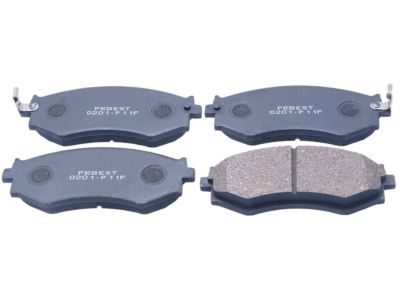
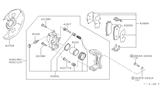
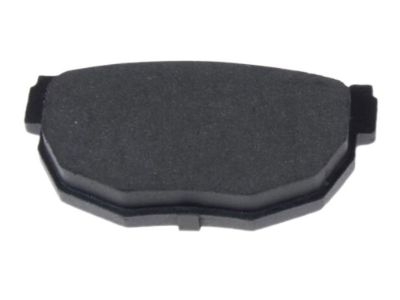
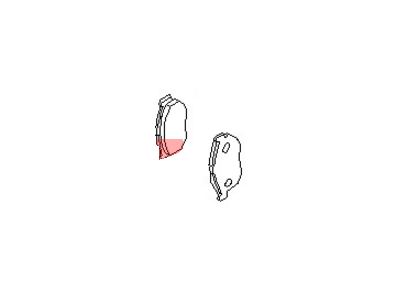
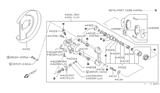
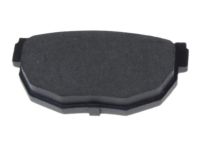
Nissan 240SX Brake Pad Set
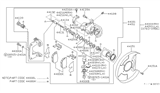
This Brake Pad Set is well known for its reliability in addition to its performance, and it is a very vital part that should not miss in your Nissan 240SX. This Brake Pad Set has been developed for the Nissan 240SX specifically, and is primarily charged with the responsibility of converting energy in motion to thermal energy via interaction with the brake rotors to properly and safely effect a brake. Applicable to several models of Nissan 240SX, the hatchback, as well as the coupe, this Brake Pad Set improves the braking capabilities of the vehicle thus improving its safety on the road. These Nissan 240SX Brake Pad Set use high-quality materials, which enables the following differences that are considered essential, friction, wear, noisy, etc that are crucial in determining performance, a factor that defines the Nissan 240SX. It is also highly advisable to maintain the Brake Pad Set consistently, and normally it is required within the 50,000-mile level in order to avoid circumstances such as brake fade and uneven wear, thus the Nissan 240SX will be able to deliver its highly performance. Furthermore, one has to note that the Brake Pad Set meets the associated hardware including clips and springs which are intended to improve its functionality. With the features such as reliability, functionality and the compatibility, the Brake Pad Set is the outstanding product in the automotive industry, which can meet the needs of the owners of Nissan 240SX car for maintaining car and increasing its performance.
If you need any OEM Nissan 240SX Brake Pad Set, feel free to choose them out of our huge selection of genuine Nissan 240SX Brake Pad Set. All our parts are offered at unbeatable prices and are supported by the manufacturer's warranty. In addition, we offer quick shipping to have your parts delivered to your door step in a matter of days.
Nissan 240SX Brake Pad Set Parts Questions & Experts Answers
- Q:How to check the pad lining thickness and replace the rear Brake Pad Set for Nissan 240sx?Posted by Rosie A.A:To check the pad lining thickness, it is possible to do so without removing the pads, and the manufacturer's pad wear limit can be found in the Brake Specifications chart, although this may differ from state inspection laws. When replacing pads, inspect the rotors for scoring or wear, and if they are badly scored, they should be resurfaced. All four front brake pads must be replaced as a complete set, and bleeding the brake system should only be done if necessary. For the CL11H and CL9H Series Disc Brake Assembly, raise the rear of the car and support it with safety stands before removing the brake pads, then take out the pin bolts and lift off the caliper body. Remove the pad springs, pads, and shims, clean the piston end of the caliper body, and carefully turn the piston clockwise back into the caliper body, ensuring not to damage the piston boot. Coat the pad contact area with silicone-based grease, install the pads, shims, and springs, and position the caliper body back in place, tightening the pin bolts to 16-23 ft. lbs. Finally, replace the wheel, lower the car, and bleed the system if necessary. For the CL11HB and CL14B Series Disc Brake Assembly, raise the vehicle securely, remove the rear wheel, and take out the two pin bolts and lock spring to suspend the caliper above the disc. Remove the pad retainers, pads, and shims, ensuring not to depress the brake pedal while the cylinder body is raised to avoid the piston popping out. Check the fluid level in the master cylinder and use a syringe to remove excess fluid if necessary, then press the caliper piston back in by turning it clockwise to accommodate the new pads. Install the new pads with new shims in reverse order, torque the caliper pin bolts to 16-23 ft. lbs., and bleed the brakes if needed, ensuring to pump the brakes for a firm pedal before driving.Answered by Nissan Parts Specialist Glenn / Mar 27, 2024