×
- Hello
- Login or Register
- Quick Links
- Live Chat
- Track Order
- Parts Availability
- RMA
- Help Center
- Contact Us
- Shop for
- Nissan Parts
- Nissan Accessories

My Garage
My Account
Cart
Genuine Nissan 240SX Ignition Coil
Ignition Coil Resistor- Select Vehicle by Model
- Select Vehicle by VIN
Select Vehicle by Model
orMake
Model
Year
Select Vehicle by VIN
For the most accurate results, select vehicle by your VIN (Vehicle Identification Number).
3 Ignition Coils found
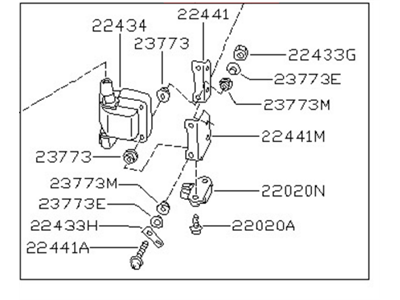
Nissan 240SX Ignition Coil
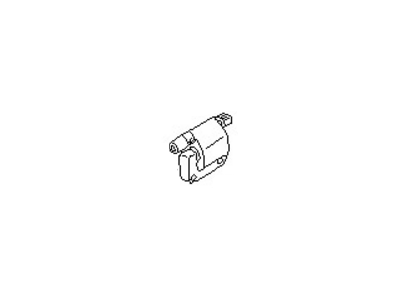
The Nissan 240SX Ignition Coil, this is an important part that has a huge impact on Nissan 240SX vehicles. Located in the distributor and recognized for transforming the low voltage of the battery into the high voltage that is needed to ignite the air/fuel mixture in the engine cylinders, the Ignition Coil is a critical component in the improvement of the engine performance. For ignition, there are styles applied on different Nissan 240SX models like the distributor style and the modern coil on plug system that aims at enhancing ignition efficiency and reduce cases of misfires that are not good for performance and fuel consumption. For the enthusiasts and racers who mostly use their Nissan 240SX for performance, this reliability is very crucial. The fact that the Ignition Coil is suitable for the single as well as the dual overhead camshaft of the company's 240SX should easily satisfy any driver. Furthermore, the Ignition Coil can follow parts and generates greater voltage including between 15,000 to 40,000 voltages that help in making the engine more efficient as well as safe to use in the cars making it a product standout in the market. The Nissan 240SX Ignition Coil not only assists the vehicle but also strengthened its position as the drift racer and tuner's sweethearts in the edition's automotive evolution course. In general, the Nissan 240SX Ignition Coil is the perfect example of providing reliability, efficiency, and progression that Nissan always offers.
If you need any OEM Nissan 240SX Ignition Coil, feel free to choose them out of our huge selection of genuine Nissan 240SX Ignition Coil. All our parts are offered at unbeatable prices and are supported by the manufacturer's warranty. In addition, we offer quick shipping to have your parts delivered to your door step in a matter of days.
Nissan 240SX Ignition Coil Parts Questions & Experts Answers
- Q:How to test the primary and secondary resistance of the Ignition Coil on Nissan 240sx?Posted by Vitor S.A:To start with, the check is carried out for the 1982-83 200SX with the Z series engine. We should begin by testing the supply power circuit, this is done by taking off the connector from the top of the IC unit and putting the ignition on when all is in order to be sure that there are 12 volts at every terminal; if not, then fix it. Then we have to examine primary windings of an ignition coil; this can be done by disconnecting the harness connector from negative coil terminal and measuring resistance between positive and negative terminals of a coil using an ohmmeter; if resistance goes beyond 1.04-1.27 ohms range, replace a coil. It's also necessary to disable an electronic fuel injection system so that you cannot start an engine, unplug a high tension cable from a Distributor cap and hold it about 1/4 inch away from an engine block while a friend will be cranking an engine with a starter motor so as to observe whether there is any spark jumping from this cable onto an engine block or ground. Models such as 1984-88 200SX, 1989-92 240SX, and Stanza have more advanced computer-controlled ignition systems. For primary resistance on any Stanza model after 1982 which should read between .84 and 1.02 ohms or for Stanza models manufactured after '87 that come equipped with "Mold type" coils, put your ohmmeter leads across these two terminals at bottom part of revolutionize assembly, which should read between .8-1.0 ohm. In case they are higher than required then replace them since they will damage other parts of your vehicle's electrical system. If you turn off your car's ignition key while removing your high-tension wire from its spark plug connections on one end and primary wiring on another end then measure resistances across the primary and central terminal, an ohmmeter will register anything between 8,200 to 12,400 ohms before you replace any ignition coil whose internal resistance falls outside this range. Newer vehicles may have a power transistor along with its coil for amplification of signals that comes from ECU; some modern cars use a power transistor to amplify the ignition signal from the ECU and this is combined with the ignition coil as one unit. Finally, when changing your coil assembly, disconnect and mark off all wiring connections, remove the old coil assembly, if applicable transfer the mounting bracket of the coil mounting bracket and then ensure that you reinstall properly everything inclusive of new coil assembly with its corresponding electrical connections.Answered by Nissan Parts Specialist Brian / Dec 05, 2025