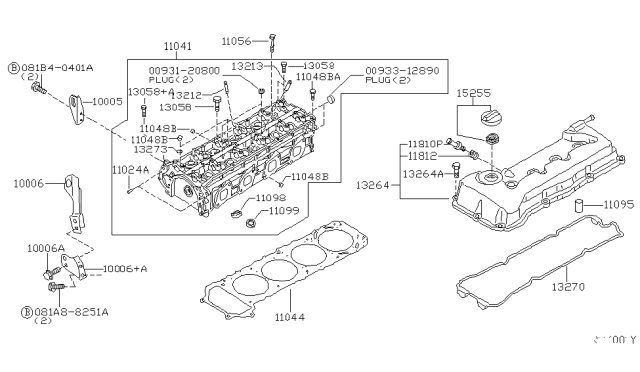
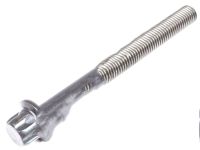
Regardless of whether the cylinder head was sent to an automotive repair shop for valve servicing, ensure it is clean before beginning reassembly. If the cylinder head was sent out for valve servicing, the valves and related components will already be in place, allowing you to start the reassembly procedure with the installation of the valves, lightly oiled on the stems, into the valve guides. Install the valve spring seat(s) on the cylinder head, noting that SOHC engines have an inner and outer valve spring seat while DOHC engines have a single valve spring seat. Install the outer valve spring seat first, followed by the inner valve spring seat on SOHC engines. After positioning the valve spring seat(s) correctly, install the valve seals over the top of the valve tips by hand, using the valve stems as a guide to slide the seals down to the top of each valve guide. To firmly install the oil seals over the guides, use a seal installation tool or an appropriate-size deep socket, gently tapping each seal into place until properly seated on the guide, taking care not to hammer on the guide seal once seated or twist the seals during installation. On SOHC engines, only the intake valve guide requires a seal installation tool, while the exhaust valve seals should slide into place by hand. Next, slip the valve spring(s) in place on the cylinder head and use a spring compressor to install the springs, retainers, and valve stem locks, ensuring that on SOHC engines, the inner valve spring is installed into the outer valve spring as a set, with the end of the outer valve spring featuring more closely wound coils or paint marks facing the cylinder head. For DOHC engines, install the lifters and camshafts, while for SOHC engines, install the camshafts, oil seals, lifter guide assembly, and rocker arms. Always install old cylinder head components in their original locations.