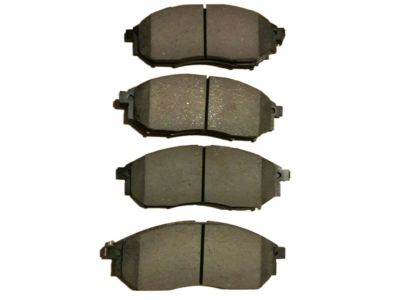
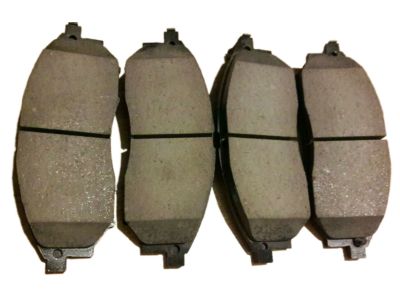
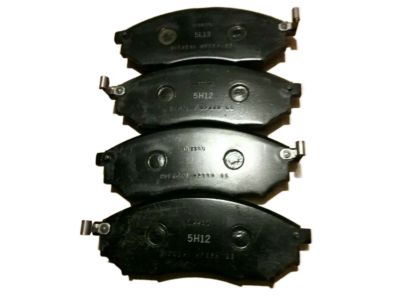
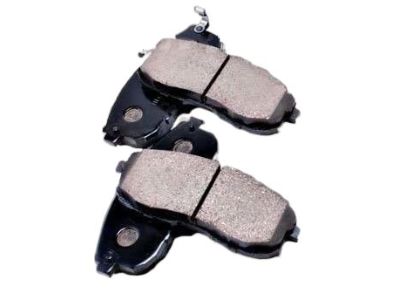
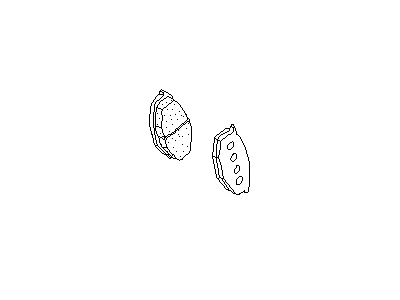
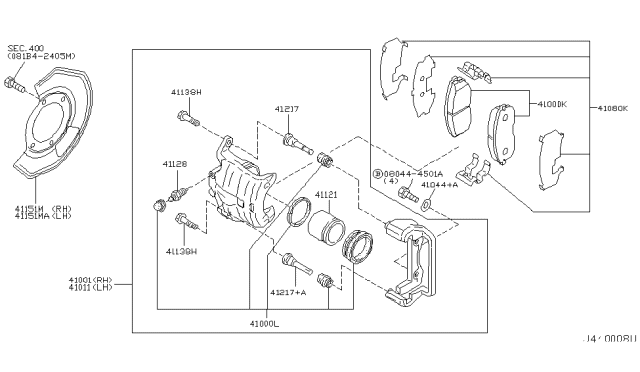
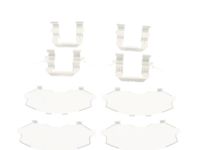
Before working, remove the wheel blockade first. Then, create a stable work area by loosening wheel nuts, lifting one side of the car, and resting it on blocky jackstands. Do this before removing brake wheels and caps from the brake fluid reservoir. Take off the cover from the brake fluid tank and leave the wheels before you begin work on one set of brakes at a time. Examine the brake disc closely, then follow the right steps for removing it when machining is necessary. To install the new brake pads on floating calipers, push the piston all the way back with a C-clamp if necessary, then use brake fluid from the reservoir to raise the fluid level back to half full. Use brake cleaner to clean away dirt from the caliper. To take out the lower bolt on each front caliper, push the caliper up, strap it down, and make sure you don't harm the boot that protects the top guide-pin. Pull the inner and outer brake pads off together with the anti-rattle clips. Then replace any damaged ones with new ones. Clean up the guide-pin, insert it again, and check that the guide-pin boot is carefully placed into position. Cover the brake pad backs and related shims with oil, attach the pads, and lock down the caliper. Same as for front calipers here: take off the upper mounting bolt, lower the caliper down, replace the pads, and apply lubricating grease again. To fix brake pads in fixed calipers, take out the pin and cross-spring first, then pull the brake pad towards you as you push the caliper piston deeper into the wheel. Apply silicone-based grease on new brake pads, place them inside the caliper, put back the pad pins, and put the cross-spring back in place. In the end, install the tires, lower the car, thread all bolts on the wheels, push the brake pedal to align brake pads with the disc, monitor brake fluid levels, test the braking system, and drive safely once everything works well.