×
- Hello
- Login or Register
- Quick Links
- Live Chat
- Track Order
- Parts Availability
- RMA
- Help Center
- Contact Us
- Shop for
- Nissan Parts
- Nissan Accessories

My Garage
My Account
Cart
Genuine 1990 Nissan 240SX Transmission Assembly
Trans Assembly- Select Vehicle by Model
- Select Vehicle by VIN
Select Vehicle by Model
orMake
Model
Year
Select Vehicle by VIN
For the most accurate results, select vehicle by your VIN (Vehicle Identification Number).
4 Transmission Assemblies found
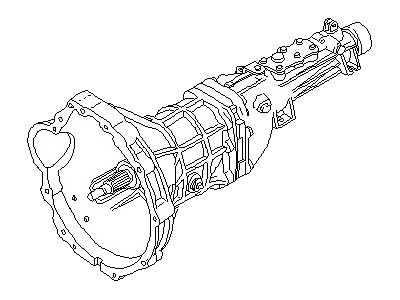
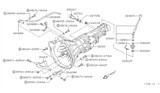 Product Specifications
- Other Name: Transmission Assy
- Manufacturer Note: FS5W71C
- Replaced by: 32010-51F21
- Lookup Code: 32010
- Item Weight: 112.20 Pounds
- Item Dimensions: 41.3 x 21.1 x 19.9 inches
- Condition: New
- Fitment Type: Direct Replacement
- SKU: 32010-51F00
- Warranty: This genuine part is guaranteed by Nissan's factory warranty.
- Product Specifications
- Other Name: Transmission Assy; Transmission
- Manufacturer Note: FS5W71C
- Lookup Code: 32010
- Item Weight: 121.00 Pounds
- Item Dimensions: 41.2 x 21.8 x 21.2 inches
- Condition: New
- Fitment Type: Direct Replacement
- SKU: 32010-40F00
- Warranty: This genuine part is guaranteed by Nissan's factory warranty.
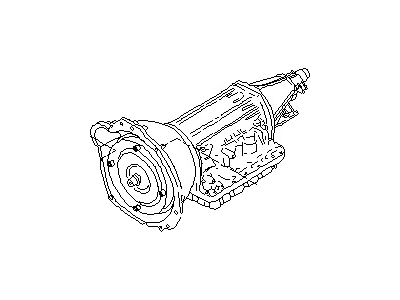
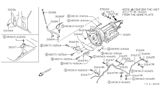 Product Specifications
- Other Name: Automatic Transmission; Transmission
- Manufacturer Note: RE4R01A
- Lookup Code: 31020
- Item Weight: 191.90 Pounds
- Item Dimensions: 40.4 x 21.2 x 21.2 inches
- Condition: New
- Fitment Type: Direct Replacement
- SKU: 31020-45X06
- Warranty: This genuine part is guaranteed by Nissan's factory warranty.
- Product Specifications
- Other Name: Transmission
- Manufacturer Note: RE4R01A
- Lookup Code: 31020
- Item Weight: 192.60 Pounds
- Item Dimensions: 40.8 x 21.4 x 20.0 inches
- Condition: New
- Fitment Type: Direct Replacement
- SKU: 31020-45X64
- Warranty: This genuine part is guaranteed by Nissan's factory warranty.
1990 Nissan 240SX Transmission Assembly
Committed to delivering top-notch quality at affordable prices, our website is your go-to source for OEM 1990 Nissan 240SX Transmission Assembly worldwide. Each of our genuine 1990 Nissan 240SX Transmission Assembly come with a manufacturer's warranty, so rest assured, quality and cost are covered. With us, you're making a smart choice that stands the test of time.
1990 Nissan 240SX Transmission Assembly Parts Questions & Experts Answers
- Q:What are the critical steps and cleanliness considerations for the Transmission Assembly when overhauling a RS5F31A manual transaxle on 1990 Nissan 240sx?Posted by Meg J.A:Sanitation becomes a significant aspect in the process of rebuilding manual transaxle; the exterior of transaxle assembly should be cleaned with high-pressure washer before disassembling the unit to avoid contamination of interior components of the unit. When handling and inspecting and reassembling, all parts should be cleaned with solvent and air dried, no wiping cloths are allowed to be used. The regular wheel bearing grease should not be used; it is better to apply lube seals with clean transaxle oil and use unmedicated petroleum for thrust washers because they facilitate the seal assembly being inserted and are non-harmful to the components. It is necessary to always run bolt threads into clean transaxle oil before assembling the bolt into aluminum part and it is required to apply antiseize compound. Thread locking, a torque wrench is imperative to avoid stripping threads, internal snap rings should be expanded, while the external ones compressed. To start, while draining gear lube, one should remove the case bolts and note where they were located before taking out the case with the help of a plastic hammer. Carry on by the withdrawal of parts that include the backup light switch, oil gutter, shift forks, and the mainshaft; care should be taken that the mainshaft is drawn straight out to minimize their damage. When choosing components to use, one should inspect all the parts for damage or signs of wear and during assembly one should ensure that they use the right lubricant and that the clearances are correct. When dealing with the final drive assembly, see that all the mated areas are slightly marred or damaged, take care when putting in components and recall the turning torque test. During the procedure, cleanliness should be observed in addition to the measured approach in order to guarantee success in the overhaul.Answered by Nissan Parts Specialist Eliot / Oct 31, 2023
Related 1990 Nissan 240SX Parts
 1990 Nissan 240SX Valve Body
 1990 Nissan 240SX Torque Converter
 1990 Nissan 240SX Transmission Pan
 1990 Nissan 240SX Needle Bearing
 1990 Nissan 240SX Transmission Oil Cooler