×
- Hello
- Login or Register
- Quick Links
- Live Chat
- Track Order
- Parts Availability
- RMA
- Help Center
- Contact Us
- Shop for
- Nissan Parts
- Nissan Accessories

My Garage
My Account
Cart
Genuine Nissan 240SX Transmission Assembly
Trans Assembly- Select Vehicle by Model
- Select Vehicle by VIN
Select Vehicle by Model
orMake
Model
Year
Select Vehicle by VIN
For the most accurate results, select vehicle by your VIN (Vehicle Identification Number).
9 Transmission Assemblies found
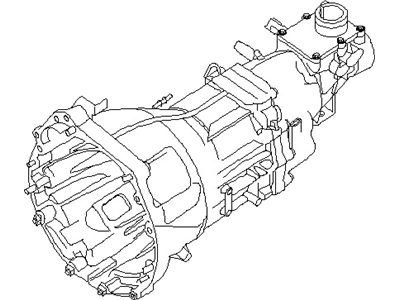
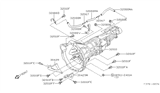
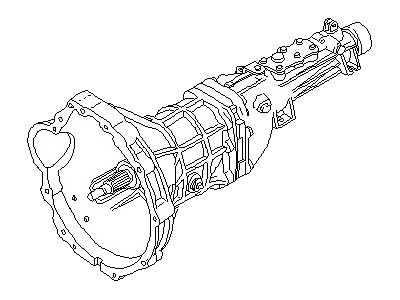
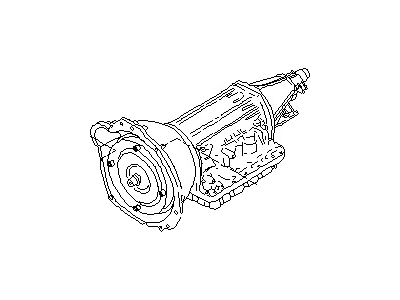
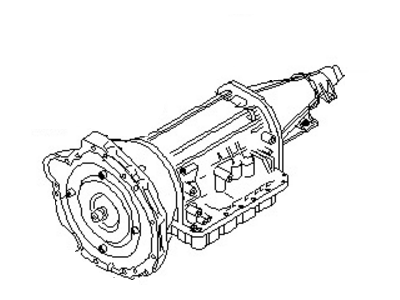
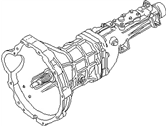
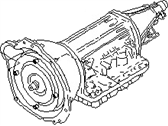
Nissan 240SX Transmission Assembly
Nissan 240SX Transmission Assembly serves as the crucial link between engine torque and road motion, letting drivers manage speed and power with ease. The sporty 240SX line from Nissan was in production for a long time. During the life of the 240SX line, the engineers paired the engines of this vehicle with two main styles of Transmission Assembly. The first of these was a traditional manual while the other was a fully hydraulic automatic. Each of these was adept at helping the car climb hills or cruise the highways. The configuration of the manual Transmission Assembly consists of parallel shafts which carry gears of multiple sizes. The driver selects the gear directly and is praised for its lightweight feel that gives rise to direct engagement. In contrast, an automatic Transmission Assembly employs planetary gearsets and a fluid coupling. Moreover, internal clutches are activated by hydraulic pressure. Furthermore, with no need to depress the clutch pedal for gear shifting, it offers easy driving for daily driving conditions. The support design achieves high wheel force at low vehicle speed while allowing a relaxed engine rpm at higher speed to save fuel and trim emissions. Both variants channel engine torque through chosen ratios. Nissan's performance coupes developed a unique reputation for being fun to drive. In keeping with that spirit, the 240SX wasn't kept fitted with modern alternatives, such as CVT or DCT, but retained a choice between hand-shifting and convenient automatics. The Transmission Assembly is a vital component in ensuring optimal performance.
If you need any OEM Nissan 240SX Transmission Assembly, feel free to choose them out of our huge selection of genuine Nissan 240SX Transmission Assembly. All our parts are offered at unbeatable prices and are supported by the manufacturer's warranty. In addition, we offer quick shipping to have your parts delivered to your door step in a matter of days.
Nissan 240SX Transmission Assembly Parts Questions & Experts Answers
- Q:What are the key steps and considerations for overhauling the Transmission Assembly of a RS5F50A manual transaxle on Nissan 240sx?Posted by Linda Q.A:Sanitation is paramount especially during the overhaul of the manual transaxle; the outer periphery of the casing should be washed with high-pressure washer before the casing is opened in order to minimize the entry of dirt that may bring about the destruction of internal components. While disassembling and reassembling all parts, it is necessary to clean equally all components with solvent and dry them by using compressed air not using cloths or rags. Clean transaxle oil should be used for lubricating seals whereas mineral oils should not be used for lubrication since their residues are unhealthy to thrust washers; normal petroleum jelly should be used for holding thrust washers. Before installing bolts, always roll the threads in clean transaxle oil, especially when they will go into aluminum pieces, and always use a torque wrench in order not to strip the thread. The internal snaprings should be larger than the snaprings seen in the figure while the external rings should ideally be smaller for reuse. Disassembly entails the sequential withdrawal of; Shift bolts and position switches, Gear assemblies, The entire disassembled assembly is then inspected for wear or damage on the input shaft, gears and the main shaft. The assembling of inserts, gears and bearing must be well done carefully so that there will be required clearances and torque at different areas. In the final drive assembly, side gears and thrust washers are fitted followed by checking the deflection of thrust washer, and the bearings should roll smooth. The principal operations in the main bearing assembly include; cleaning mating surfaces for the mainshaft, fitting of a suitable preload shim. The transaxle assembly is then followed by the addition of sundry parts to have a good gear shift and an accurate torque reading.Answered by Nissan Parts Specialist Jim / Aug 19, 2025
- Q:What is the location of the transmission assembly serial number on manual and automatic transmissions, and how does it differ for the Nissan 240sx?Posted by Cereya M.A:The transmission serial number is stamped on the front upper face of the transmission case for manual transmissions, or on the lower right side of the case for automatic transmissions, except for the 240SX model, where it is located on the right side in the tail shaft area.Answered by Nissan Parts Specialist Martin / Feb 17, 2025
- Q:How to remove and install the Transmission Assembly on the Nissan 240sx?Posted by Lori E.A:Cut off the battery power, take out the throttle cables, drop the gear lever assembly, unplug the safety switch and shift controller power wires. First, lift up the car and safeguard its position. Unplug the drain plug connected to the torque converter, but if there's no converter drain plug available, you can drain the transmission instead (using your other hand). If there is also no transmission drain plug, take out the pan to prevent dirt from entering and then replace the drained pan. Remove three parts: the front exhaust pipe, vacuum tube, and speedometer cable. Then close the fluid cooler tubes with plugs to stop fluid from leaking. Lift the engine and transmission while removing the driveshaft and starter. Place support jack under the engine oil pan to lift the transmission and give needed support. Slide out the rear crossmember, pay attention to the way the torque converter and drive plate fit together, and detach the bolts joining the torque converter to the drive plate, turning the engine as needed. Loosen and take out the transmission bolts from the engine. Label each bolt, for precise reinstallation later - a must-learn during 240SX service. Measure runout on the drive plate with a dial indicator. Keep the results below 0.020". After installing the torque converter, measure the space from its face to the edge of the housing to confirm it exceeds 1.02 inches (26mm). Nut up the drive plate, fix the drive plate to converter with safe torque setting, and bolt engine to transmission while also securing the converter housing to engine properly, tightening the drive plate-to-torque converter bolts to 29-36 ft. lbs. (39-49 Nm) with specific torque for each bolt. Turn the crankshaft carefully a few times to make sure the transmission can move without any problems. Add the rear cross member, then remove engine and transmission supports to put in place the starter, and join the driveshaft while fastening its bolts with 29-33 pound-force feet n.m. Unplug, attach, then tighten all heater and water cooling tubes; reconnect the speedometer cable and the vacuum pipe; install a new exhaust pipe section at the front; join transmission controls to their wiring; connect the shift lever unit; reconnect the battery cable; refill the transmission to its proper volume; plan any shifts to fix issues. Do a road test, then look at the amount of fluid in the transmission.Answered by Nissan Parts Specialist Anildo / Jun 05, 2024