×
- Hello
- Login or Register
- Quick Links
- Live Chat
- Track Order
- Parts Availability
- RMA
- Help Center
- Contact Us
- Shop for
- Nissan Parts
- Nissan Accessories

My Garage
My Account
Cart
Genuine 2014 Nissan Juke Turbocharger
Turbo- Select Vehicle by Model
- Select Vehicle by VIN
Select Vehicle by Model
orMake
Model
Year
Select Vehicle by VIN
For the most accurate results, select vehicle by your VIN (Vehicle Identification Number).
4 Turbochargers found
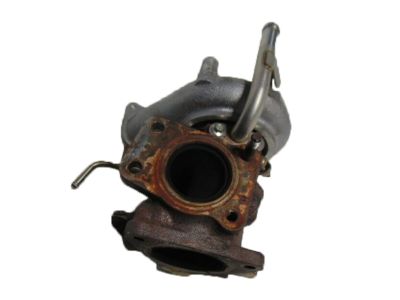
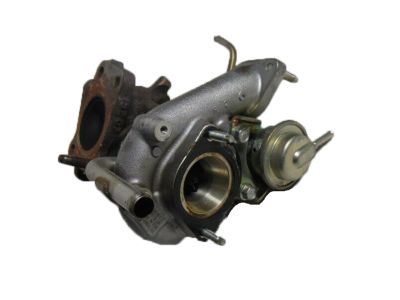
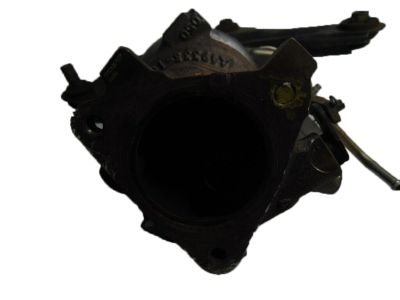
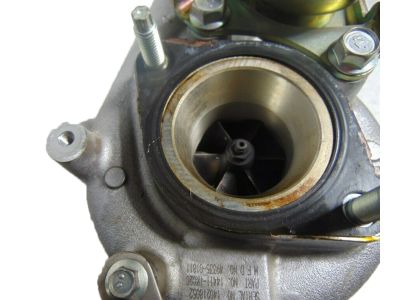
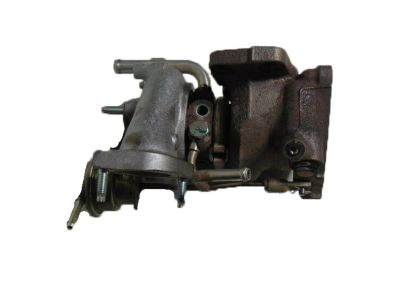
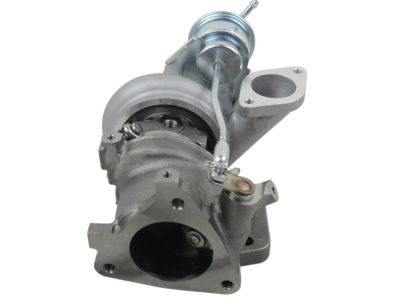
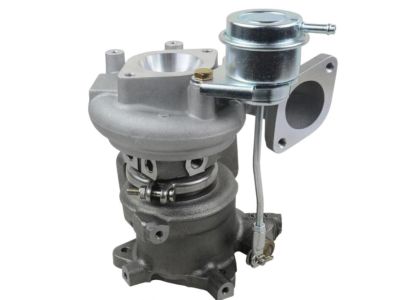
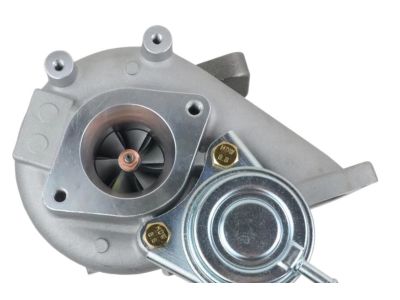
2014 Nissan Juke Turbocharger
Part Number: 14411-1KC2C$1484.22 MSRP: $1791.79You Save: $307.57 (18%)Ships in 1-2 Business DaysProduct Specifications- Replaced by: 14411-1KC2D
- Lookup Code: 14411
- Item Weight: 14.20 Pounds
- Item Dimensions: 10.1 x 10.3 x 10.4 inches
- Condition: New
- Fitment Type: Direct Replacement
- SKU: 14411-1KC2C
- Warranty: This genuine part is guaranteed by Nissan's factory warranty.
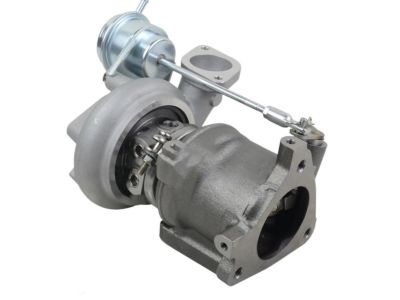
2014 Nissan Juke Turbocharger
Part Number: 14411-1KC2B$1484.22 MSRP: $1791.79You Save: $307.57 (18%)Ships in 1-3 Business DaysProduct Specifications- Replaced by: 14411-1KC2D
- Lookup Code: 14411
- Item Weight: 14.20 Pounds
- Item Dimensions: 10.4 x 10.3 x 10.1 inches
- Condition: New
- Fitment Type: Direct Replacement
- SKU: 14411-1KC2B
- Warranty: This genuine part is guaranteed by Nissan's factory warranty.
2014 Nissan Juke Turbocharger
Part Number: 14411-BV84B$1961.01 MSRP: $2369.01You Save: $408.00 (18%)Ships in 1-3 Business DaysProduct Specifications- Other Name: Exhaust Manifold
- Replaces: 14411-BV82A
- Lookup Code: 14411
- Item Weight: 13.90 Pounds
- Item Dimensions: 19.2 x 14.5 x 13.0 inches
- Condition: New
- Fitment Type: Direct Replacement
- SKU: 14411-BV84B
- Warranty: This genuine part is guaranteed by Nissan's factory warranty.
2014 Nissan Juke Turbocharger
Part Number: 14411-1KC1D$1796.33 MSRP: $2169.64You Save: $373.31 (18%)Ships in 1-3 Business DaysProduct Specifications- Replaced by: 14411-1KC1E
- Lookup Code: 14411
- Item Weight: 14.60 Pounds
- Item Dimensions: 10.0 x 10.5 x 10.6 inches
- Condition: New
- Fitment Type: Direct Replacement
- SKU: 14411-1KC1D
- Warranty: This genuine part is guaranteed by Nissan's factory warranty.
2014 Nissan Juke Turbocharger
Committed to delivering top-notch quality at affordable prices, our website is your go-to source for OEM 2014 Nissan Juke Turbocharger worldwide. Each of our genuine 2014 Nissan Juke Turbocharger come with a manufacturer's warranty, so rest assured, quality and cost are covered. With us, you're making a smart choice that stands the test of time.
2014 Nissan Juke Turbocharger Parts Questions & Experts Answers
- Q:How does a turbocharger enhance engine efficiency on petrol 2014 Nissan Juke?Posted by Zainab A.A:An efficient turbocharger as fitted only on 1.2 litre engine and which is mounted directly on the surface of the exhaust manifold helps to improve the pressure of air to be forced into the cylinders above atmospheric pressure hence allow the supply of more fuel in proportion to the air intake. The operation of the turbocharger draws energy from the blow-by gases, circulating through a uniquely designed housing that routes the exhaust gases to spin a turbine wheel coupled to a shaft, connected to a compressor wheel to compress the air drawn in through the car's throttle before it goes in the inlet manifold. The compressed air then moves to the intercooler which is an air to air heat exchanger mounted just behind the front bumper to cool the air to improve it density for better engine utilization. Pressure in the inlet manifold is controlled by a wastegate that venting exhaust gase through an actuator depending on the pressure to the turbine wheel, while Boost pressure is sensed by an air inlet tube. Oil supplied to the turbo shaft originates from the main oil gallery and being in a state of constant supply, floats on the oil film, the oil falling to the sump through the drain pipe. The precaution is expedient because of its high rotating speed and the temperature level where the turbocharger operates; one should not race the engine straight after start; there should be a delay before the engine returns to idle and should remain at idle for sometime before it is switched off after high speed runs. Sustained change of oil and filter accompanied with the usage of high-esteem oil reduces instances of carbon deposits on the turbo shaft and eventual failure.Answered by Nissan Parts Specialist Javi / Apr 20, 2024
Related 2014 Nissan Juke Parts
 2014 Nissan Juke Oil Filter
 2014 Nissan Juke Spark Plug
 2014 Nissan Juke Dipstick
 2014 Nissan Juke Air Filter
 2014 Nissan Juke Alternator
 2014 Nissan Juke Fuel Pump
 2014 Nissan Juke Drive Belt
 2014 Nissan Juke Water Pump
 2014 Nissan Juke Intake Manifold Gasket
 2014 Nissan Juke Thermostat
 2014 Nissan Juke Dipstick Tube