×
- Hello
- Login or Register
- Quick Links
- Live Chat
- Track Order
- Parts Availability
- RMA
- Help Center
- Contact Us
- Shop for
- Nissan Parts
- Nissan Accessories

My Garage
My Account
Cart
Genuine 2015 Nissan Juke Piston
Engine Pistons- Select Vehicle by Model
- Select Vehicle by VIN
Select Vehicle by Model
orMake
Model
Year
Select Vehicle by VIN
For the most accurate results, select vehicle by your VIN (Vehicle Identification Number).
6 Pistons found
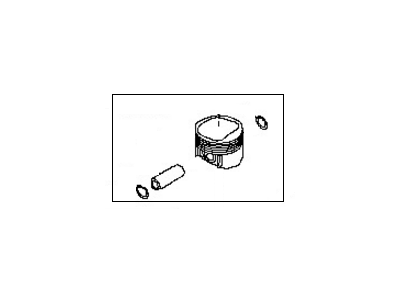
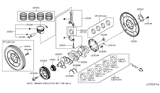
2015 Nissan Juke Piston
Part Number: A2010-1KC0C$98.20 MSRP: $138.70You Save: $40.50 (30%)Ships in 1-3 Business DaysProduct Specifications- Other Name: Piston - W/Pin; Piston
- Manufacturer Note: STD GRADE=1
- Replaces: A2010-1KC0A
- Lookup Code: 12010
- Item Weight: 1.10 Pounds
- Item Dimensions: 2.4 x 3.0 x 3.1 inches
- Condition: New
- Fitment Type: Direct Replacement
- SKU: A2010-1KC0C
- Warranty: This genuine part is guaranteed by Nissan's factory warranty.
2015 Nissan Juke Piston
Part Number: A2010-1KC1C$91.47 MSRP: $129.20You Save: $37.73 (30%)Ships in 1-2 Business DaysProduct Specifications- Other Name: Piston - W/Pin; Piston
- Manufacturer Note: STD GRADE=2
- Replaces: A2010-1KC1A
- Lookup Code: 12010
- Item Weight: 1.10 Pounds
- Item Dimensions: 2.6 x 3.6 x 3.6 inches
- Condition: New
- Fitment Type: Direct Replacement
- SKU: A2010-1KC1C
- Warranty: This genuine part is guaranteed by Nissan's factory warranty.
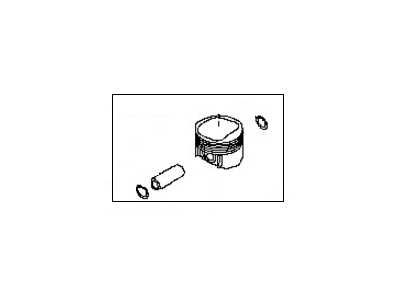
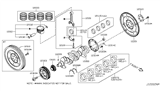
2015 Nissan Juke Piston,W/Pin
Part Number: A2010-1KC1A$91.47 MSRP: $129.20You Save: $37.73 (30%)Ships in 1-3 Business DaysProduct Specifications- Other Name: Piston-W/Pin
- Replaced by: A2010-1KC1C
- Lookup Code: 12010
- Item Weight: 1.10 Pounds
- Item Dimensions: 3.3 x 3.4 x 2.5 inches
- Condition: New
- Fitment Type: Direct Replacement
- SKU: A2010-1KC1A
- Warranty: This genuine part is guaranteed by Nissan's factory warranty.
2015 Nissan Juke Piston,W/Pin
Part Number: A2010-1KC0A$98.20 MSRP: $138.70You Save: $40.50 (30%)Ships in 1-3 Business DaysProduct Specifications- Other Name: Piston-W/Pin
- Replaced by: A2010-1KC0C
- Lookup Code: 12010
- Item Weight: 1.10 Pounds
- Item Dimensions: 3.3 x 3.3 x 2.6 inches
- Condition: New
- Fitment Type: Direct Replacement
- SKU: A2010-1KC0A
- Warranty: This genuine part is guaranteed by Nissan's factory warranty.
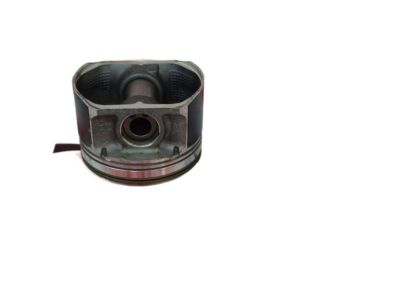
 Product Specifications
- Other Name: Piston-W/Pin; Piston
- Manufacturer Note: G=1-0
- Lookup Code: 12010
- Item Weight: 1.10 Pounds
- Item Dimensions: 3.6 x 3.2 x 2.0 inches
- Condition: New
- Fitment Type: Direct Replacement
- SKU: A2010-BV80A
- Warranty: This genuine part is guaranteed by Nissan's factory warranty.
- Product Specifications
- Other Name: Piston-W/Pin; Piston
- Manufacturer Note: G=2-0
- Lookup Code: 12010
- Item Weight: 1.10 Pounds
- Item Dimensions: 3.2 x 3.2 x 2.6 inches
- Condition: New
- Fitment Type: Direct Replacement
- SKU: A2010-BV81A
- Warranty: This genuine part is guaranteed by Nissan's factory warranty.
2015 Nissan Juke Piston
Committed to delivering top-notch quality at affordable prices, our website is your go-to source for OEM 2015 Nissan Juke Piston worldwide. Each of our genuine 2015 Nissan Juke Piston come with a manufacturer's warranty, so rest assured, quality and cost are covered. With us, you're making a smart choice that stands the test of time.
2015 Nissan Juke Piston Parts Questions & Experts Answers
- Q:What steps should be taken before starting the inspection process of piston/connecting rod assemblies on 2015 Nissan Juke?Posted by Vermicker I.A:When beginning the inspection procedures, always degrease the piston/connecting rod assemblies and take out the original piston rings from the pistons; new rings are to be used during the reassembly. Slowly expand more of the older rings up on to the pistics, employing old feeler blades so that they don't drop down to unoccupied positions and also while trying not to scratch the pistons. Remove carbon build up with an old ring to prevent cutting into the actual metal when rubbing off the excessive carbon on the piston top and the ring grooves. Wash the assembly with paraffin or the most appropriate solvent cleaning for that particular equipment, to check on condition of oil return holes. If the pistons and cylinder bores are without damage and require no rebore then the original pistons can be mated back in but the rings that go around them must always be new. Every piston should be scrutinized for the signs of crack and scores, scuff or burnt lands, if seen, cooling and lubricating systems must be properly checked to heat and combustion abnormality. Externally, corrosion such as pitting may indicate leakage of the coolant; this must be fixed to avoid future occurrences. Check the value of piston ring-to-groove clearance by using the feeler blade; if value is higher than HGT regards, a new set of pistons is required. Measurement for pistons should be precise and a recommended automotive engineering workshop should be the one to undertake the job as well as provide suitable pistons for re-bore if the situation arises. Feel the gudgeon pin to check its fit and to see if it is too loose, which would signify wear. For models with circlips, trace the piston and connecting rod and before the separation of the two pull out the circlips and gudgeon pin without causing injury to the two parts. Check the connecting rod for cracks or distortion since damage is highly improbable unless the engine has seized or over-heated The above checks are among the most detailed and are preferably done by a specialist. In refitting pistons, ensure the pistons are fitted in accordance with the orientation marked during removal and apply some drops of clean engine oil to the gudgeon pin then insert the pin and ensure that the piston is freely moving before fitting new circlips on the piston, they should be located correctly in their respective grooves. It is more easier to warm the piston before trying to put in the gudgeon pin in place.Answered by Nissan Parts Specialist Javi / Dec 10, 2024
Related 2015 Nissan Juke Parts
 2015 Nissan Juke Crankshaft Gear
 2015 Nissan Juke Crankshaft Pulley
 2015 Nissan Juke Crankshaft
 2015 Nissan Juke Crankshaft Thrust Washer Set
 2015 Nissan Juke Belt Tensioner Bolt