×
- Hello
- Login or Register
- Quick Links
- Live Chat
- Track Order
- Parts Availability
- RMA
- Help Center
- Contact Us
- Shop for
- Nissan Parts
- Nissan Accessories

My Garage
My Account
Cart
Genuine 2015 Nissan Juke Crankshaft
Crank Shaft- Select Vehicle by Model
- Select Vehicle by VIN
Select Vehicle by Model
orMake
Model
Year
Select Vehicle by VIN
For the most accurate results, select vehicle by your VIN (Vehicle Identification Number).
1 Crankshaft found
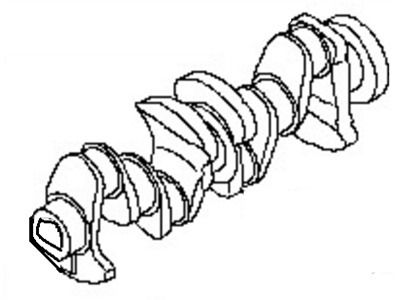
2015 Nissan Juke Crankshaft
Part Number: 12201-1KC0A$1170.69 MSRP: $1653.52You Save: $482.83 (30%)Ships in 1-3 Business DaysProduct Specifications- Other Name: Crankshaft Assembly; Crankshaft
- Lookup Code: 12200
- Item Weight: 26.70 Pounds
- Item Dimensions: 21.1 x 9.5 x 8.9 inches
- Condition: New
- Fitment Type: Direct Replacement
- SKU: 12201-1KC0A
- Warranty: This genuine part is guaranteed by Nissan's factory warranty.
2015 Nissan Juke Crankshaft
Committed to delivering top-notch quality at affordable prices, our website is your go-to source for OEM 2015 Nissan Juke Crankshaft worldwide. Each of our genuine 2015 Nissan Juke Crankshaft come with a manufacturer's warranty, so rest assured, quality and cost are covered. With us, you're making a smart choice that stands the test of time.
2015 Nissan Juke Crankshaft Parts Questions & Experts Answers
- Q:How to properly install the crankshaft and main bearings, ensuring correct alignment, lubrication, and torque settings during engine assembly on 2015 Nissan Juke?Posted by Aliaksei K.A:Main bearings for the engines are available in standard sizes and a range of undersizes to suit reground crankshafts. Clean the backs of the bearing shells and the bearing locations in both the cylinder block and the main bearing caps. Press the bearing shells into their locations, visually centralising each shell without touching the bearing surface with fingers. Note that all upper bearing shells have oil holes and are sometimes grooved, while the lower shells are plain. Wipe the shells dry with a lint-free cloth and lubricate each bearing shell in the cylinder block/crankcase with clean engine oil. Use a little grease to stick the upper thrustwashers to each side of the No 3 main bearing upper location, ensuring that the oilway grooves face outwards. Lower the crankshaft into position and check the crankshaft endfloat. Thoroughly degrease the mating surfaces of the cylinder block and the main bearing caps, then lubricate the lower bearing shells in the main bearing caps with clean engine oil, ensuring centralisation. Fit the main bearing caps using the identification marks for correct installation and insert the retaining bolts, tightening them by hand only. Working in sequence from the centre outwards, tighten the bearing cap retaining bolts to the specified Stage 1 torque setting, then tighten through the specified Stage 2 angle, checking that the crankshaft rotates freely before proceeding. Finally, fit the piston/connecting rod assemblies and, for diesel engines, install a new crankshaft left-hand oil seal.Answered by Nissan Parts Specialist Timothy / Apr 01, 2025
Related 2015 Nissan Juke Parts
 2015 Nissan Juke Oil Pump Gasket
 2015 Nissan Juke Oil Pan Gasket
 2015 Nissan Juke Rod Bearing
 2015 Nissan Juke Cam Gear
 2015 Nissan Juke Oil Pan
 2015 Nissan Juke Oil Pump
 2015 Nissan Juke Camshaft
 2015 Nissan Juke Piston Ring Set
 2015 Nissan Juke Crankshaft Gear
 2015 Nissan Juke Crankshaft Pulley
 2015 Nissan Juke Crankshaft Thrust Washer Set