×
- Hello
- Login or Register
- Quick Links
- Live Chat
- Track Order
- Parts Availability
- RMA
- Help Center
- Contact Us
- Shop for
- Nissan Parts
- Nissan Accessories

My Garage
My Account
Cart
Genuine Nissan 350Z Brake Booster
Brake Power Booster- Select Vehicle by Model
- Select Vehicle by VIN
Select Vehicle by Model
orMake
Model
Year
Select Vehicle by VIN
For the most accurate results, select vehicle by your VIN (Vehicle Identification Number).
12 Brake Boosters found
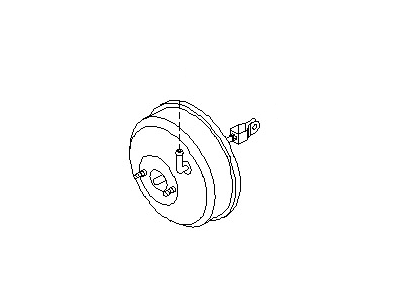
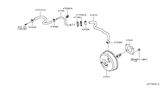
Nissan 350Z Power Booster
Part Number: D7210-CD70A$1127.81 MSRP: $1433.95You Save: $306.14 (22%)Ships in 1-2 Business DaysNissan 350Z Brake Booster Assembly
Part Number: 47210-CD725$1099.84 MSRP: $1433.95You Save: $334.11 (24%)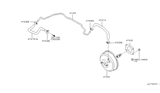
Nissan 350Z Brake Booster
Brake Booster in Nissan 350Z car parts is a component in the car that helps in decreasing the force a driver has to apply on the brake pedal to activate the brakes. It uses a vacuum chamber to boost the fluid pressure from the master cylinder consequently providing the driver with a boosted force for braking. The two basic kinds of boosters that are employed in vehicles are the vacuum boosters and the hydraulic boosters. In vacuum booster, the brake boost pressure is developed from the difference between the amount of vacuum created by the engine and atmospheric pressure while hydraulic boosters employ fluid pressure for the brake assistance. The brake booster is a trustworthy part; however, heave malfunctions are possible from time to time for repairs or overhaul. Besides, boosters come in different varieties as it comprises a single or dual diaphragm with different diameters and finished for different vehicles.
If you need any OEM Nissan 350Z Brake Booster, feel free to choose them out of our huge selection of genuine Nissan 350Z Brake Booster. All our parts are offered at unbeatable prices and are supported by the manufacturer's warranty. In addition, we offer quick shipping to have your parts delivered to your door step in a matter of days.
Nissan 350Z Brake Booster Parts Questions & Experts Answers
- Q:How to remove and install a Power Brake Booster in a Nissan 350Z?Posted by Ruthanne C.A:Except for model years 2008 G35 Coupe and 2007 G35 Sedan and later, all models need a brake test with the engine off, where you press the Brake Pedal several times before startup. While engine runs, a small pedal drop after startup signals normal brake operation. To check the booster's airtightness, turn the engine on, wait a minute or two, then turn it off again. After that, press the brake pedal gently three to four times. If pushing three times makes it feel harder than pushing four times, the system is sealed correctly. When the engine is running, press down on the brake pedal and then leave the engine running with the pedal pressed. Keep the pedal pushed for 30 seconds; if the pedal's initial hold remains consistent after this time, it means the booster is sealed correctly. The brake booster has a sealed system and must be replaced with a new or refurbished unit. Turn off the engine, push down on the brake pedal a few times to release trapped vacuum. Unplug battery cables. Unplug master cylinder. Be gentle when separating vacuum lines from the brake booster. Then remove the pin and clevis from the brake pedal booster connection. Take care not to break the small plastic fixture on the end of the clevis pin. Using a jack, lift the booster up to free the mounting screws, then tilt it out of the engine bay over the firewall as the pushrod and mounting bolts clear. You install the power booster by performing the following steps: put new gasket between booster and firewall, set pushrod length if needed, pull vacuum on the booster then measure boost clearance, tighten firewall bolts to their torque specs, put booster pushrod clevis on brake pedal, replace clevis pin if damaged, lubricate moving parts, adjust brake pedal height, bleed brakes, and check brakes back to normal use.Answered by Nissan Parts Specialist Eliot / Mar 26, 2022