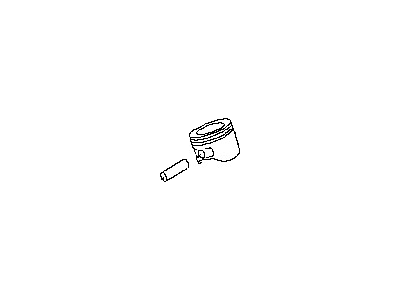
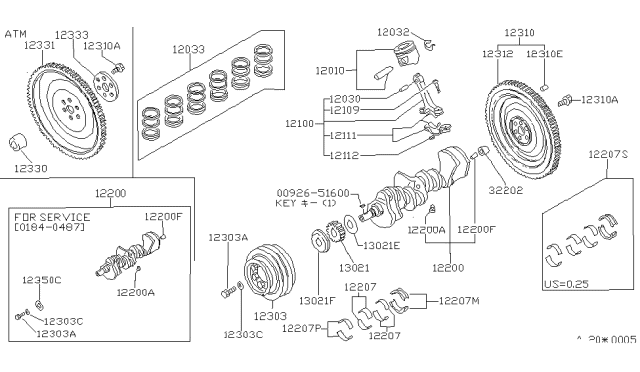
Using a piston ring installation tool, carefully remove the rings from the pistons without nicking or gouging them. Scrape all traces of carbon from the crown of the piston using a hand-held wire brush or fine emery cloth after the majority of deposits have been removed. Avoid using a wire brush mounted in a drill motor, as it can erode the soft piston material. Utilize a piston ring groove cleaning tool to eliminate carbon deposits from the ring grooves; if unavailable, a piece broken off the old ring can suffice, ensuring no metal is removed and the sides of the grooves remain undamaged. After cleaning, use solvent to clean the piston/rod assemblies and dry them thoroughly. If the pistons show no excessive damage or wear and the engine block isn't rebored, new pistons may not be necessary, as normal wear appears as even vertical lines and slight looseness of the top ring. Inspect each piston for cracks around the skirt, pin bosses, and ring lands, and look for scoring, scuffing, holes, or burned areas on the piston crown, which may indicate overheating, abnormal combustion, preignition, or detonation. Corrosion evidenced by pitting suggests coolant leakage into the combustion chamber or crankcase, necessitating correction of the underlying issue. Measure the piston ring side clearance by placing a new piston ring in each groove and using a feeler gauge to check the gap, ensuring to compare readings with specified clearances; excessive clearance indicates the need for new pistons. For piston-to-bore clearance, measure the cylinder bore and piston diameters, subtracting the piston diameter from the bore diameter to compute clearance, and compare with specifications; if greater, rebore the block and install new oversize pistons and rings. Assess piston-to-rod clearance by twisting the piston and rod in opposite directions; noticeable play suggests excessive wear, necessitating replacement of the assemblies. Finally, check connecting rods for cracks and damage by temporarily removing rod caps, inspecting bearing surfaces for nicks or scratches, and after checking, replace old bearings and secure the caps.