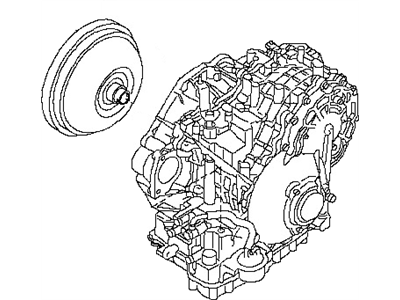
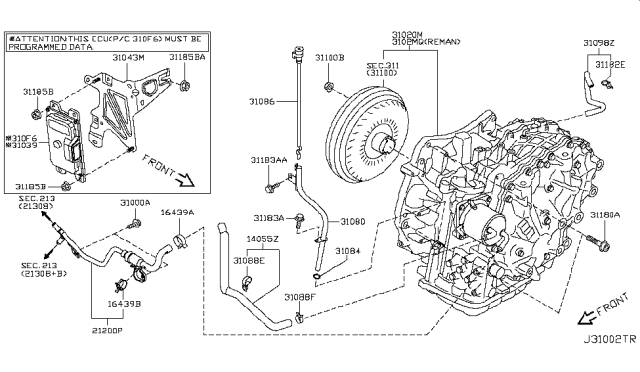
The engine can only be removed from the car as a complete unit with the transmission, which are then separated for overhaul. The engine/transmission unit is lowered out of position and withdrawn from under the vehicle, ensuring adequate clearance between the front bumper and the ground when the vehicle is raised and supported. For petrol engine models, release the pressure in the fuel system, while for diesel models, unscrew the fuel filler cap to release residual pressure. Disconnect the battery negative terminal, remove the battery and tray, apply the handbrake, jack up the front of the vehicle, and support it securely on axle stands before removing both front roadwheels. Remove the front wheel arch liners, drain the cooling system for diesel engines, and save the coolant if reusable. Drain the transmission oil and refit the drain and filler plugs with new sealing washers as needed. If dismantling the engine, drain the oil and remove the oil filter if required, then clean and refit the drain plug. Remove both driveshafts and disconnect wiring connectors from various components around the engine, labeling them if necessary. Disconnect all vacuum hoses, remove the air cleaner assembly, disconnect fuel feed and return hoses, and disconnect relevant electrical connectors. Remove the inlet manifold on petrol models and disconnect the exhaust front pipe. Disconnect heater hoses and cooling system hoses, remove the radiator electric cooling fan and shroud assembly, unbolt the air conditioning compressor without disconnecting refrigerant lines, and disconnect the clutch fluid hose from the slave cylinder. Disconnect gear linkage cables and all wiring plugs from the transmission, ensuring components that could hinder removal are disconnected. Use a low trolley under the engine/transmission assembly for easier removal, lower it carefully, and withdraw it from under the vehicle. To separate the engine from the transmission, remove the starter motor, support both units, and remove the bolts securing the transmission housing to the engine, noting the positions of each bolt. Carefully withdraw the transmission, ensuring it does not hang on the input shaft. Apply high melting-point grease to the splines of the transmission input shaft, then offer the transmission to the engine until the locating dowels engage, refit the housing bolts, and tighten them. Refit the starter motor, position the engine/transmission assembly under the vehicle, and lift it into the engine compartment, ensuring it clears surrounding components. Refit the left-hand engine/transmission mounting bracket, securing it to the transmission, then fit the right-hand body mounting bracket. Refit the front subframe and follow the removal sequence in reverse for the remainder of the refitting procedure, ensuring the wiring harness is correctly routed, driveshaft oil seals are renewed, coolant hoses are securely reconnected, and the engine and transmission are refilled with the correct lubricants. Finally, prime and bleed the fuel system for diesel models, start the engine, and check for leaks.