- Hello
- Login or Register
- Quick Links
- Live Chat
- Track Order
- Parts Availability
- RMA
- Help Center
- Contact Us
- Shop for
- Nissan Parts
- Nissan Accessories


Why choose NissanPartsDeal
- Quality Parts
To keep your car running at peak performance, you need Nissan 300ZX genuine parts from NissanPartsDeal.com. For years, we've been the leading online Nissan 300ZX parts store. At NissanPartsDeal.com all the parts in our catalog are inspected and tested by our team of experts to ensure optimal fit and performance.
- Unbeatable Prices
What makes NissanPartsDeal.com the best choice for Nissan 300ZX OEM parts? You get giant savings because our goal is to offer unbeatable prices. OEM parts are perfect for drivers who want the best products available but don't have the funds to splurge on expensive parts. Plus, Our products offer the same performance and reliability as their OEM counterparts at a fraction of their price.
- Fast Shipping
All the OEM Nissan 300ZX parts you need for routine maintenance and repair can be found in our complete Nissan 300ZX parts catalog. Having the best inventory available, your parts for Nissan 300ZX will arrive fast anywhere in the nation. Plus, all Nissan 300ZX auto parts purchases are risk-free as everything is expedited directly from dedicated authorized dealers and backed by the manufacturer's warranty, so you'll be back on the open road before you know it.
Popular Genuine Nissan 300ZX Parts
- Body Electrical Parts View More >
- Engine Mechanical Parts View More >
- Axle & Suspension Parts View More >
- Engine Electrical Parts View More >
- Miscellaneous Parts View More >
- Body (Side & Rear) Parts View More >
- Body (Front, Roof & Floor) Parts View More >
- Fuel & Engine Control Parts View More >
- Power Train Parts View More >
- Exhaust & Cooling Parts View More >
- Steering Parts View More >
- Brake Parts View More >


Shop Genuine Nissan 300ZX Parts with NissanPartsDeal.com
The Nissan 300ZX, produced over two generations, is a sports car symbolizing luxury and comfort. The first generation, manufactured from 1983 to 1989, became Nissan's best-selling Z car, while the second generation brought a redesign, speedier performance, and advanced technology to stay competitive. The Fairlady Z, as it was called in Japan, was designed by Kazumasu Takagi and his team, presenting a more aerodynamic structure and Japan's first V6 engine. The model featured electronic fuel injection and rear-wheel drive, and its VG30 engine, available in two versions, VG30E and VG30ET, provided an increased cooling system and automatic adjustable hydraulic valve timing. Paired with either a 5-speed manual or a 4-speed automatic gearbox, the car offered enhanced handling and acceleration due to its wheelbase and MacPherson independent suspension. The turbo models boasted an electronically adjustable triple shock absorber system. Later enhancements in 1987 included more aerodynamic bumpers, fog lights on the front spoiler, and a DOHC engine addition to the range. The exterior showcased a broader, rounded profile with redesigned taillights and a triple LED brake light for a modern appeal. The Nissan 300ZX stands out as a pivotal member of the Z car lineage, known for its performance, technology, and design advancements.
The Nissan 300ZX, a performance-centric sports car, is not immune to wear and tear over time. The most common issue is reduced engine performance, marked by squealing noises, overheating, oil leakage, slow acceleration, poor fuel economy, black smoke, and starting issues. These signs often precede rough engine operation, and when the Check Engine Light activates, it's crucial to inspect components like the drive belt, radiator hose, cooling hose, spark plug, coolant temperature sensor, exhaust manifold or flange gasket, camshaft seal, and rod bearing. Suspension failure is another prevalent problem, often identified by grinding or roaring noises from the tire area, abnormal tire wear, a bottoming-out vehicle, and excessive steering wheel vibration. These symptoms necessitate thorough checks of the wheel bearing, coil spring insulator, control arm bushing, and sway bar bushing. Routine maintenance plays a vital role in extending your 300ZX's lifespan, and it's essential to understand which parts require regular upkeep. Auto parts impacting driving safety, like the headlight bulb, fog light, and wiper blade, ensure better visibility and should be well-maintained. Simultaneously, certain electrical and door parts like the power window switch, door handle, headlight switch, and wiper switch are susceptible to wear and require regular attention to prolong the car's overall life expectancy.
You have nothing to worry about if you choose OEM parts as they are the best you can get in terms of quality and longevity. This is because they are precisely-engineered with the meticulous specifications of the official factory. They have passed strict quality control tests during manufacturing, so you know they're durable and sure to fit. Looking for top-quality but affordable OEM Nissan 300ZX parts, including Seat & Seat Belt, Body (Back Door & Rear Body)? Consider browsing the extensive inventory of genuine Nissan 300ZX parts at NissanPartsDeal.com. Our parts are priced the most affordably online and come with the assurance of a manufacturer's warranty. Plus, our hassle-free return policy and speedy delivery service make your shopping experience a breeze. Why wait? Start shopping today!
Nissan 300ZX Parts Questions & Answers
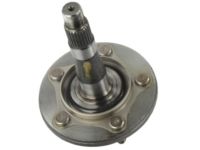
- Q:What are the differences in the types of constant velocity (CV) joints used in the drive axle shafts of Turbo and Non-Turbo models on Nissan 300ZX?Posted by Danelle W.A:The differential transmits the power to the rear wheels by way of two axle shafts that rotate by means of two universal joints. There are two kinds of constant velocity (CV) joints used, depending if the subject vehicle is a Turbo model or not. Turbo models' st owning is done with Double offset-Birfield type that comes with caged ball bearings between inner race and the cage covered by a slide joint housing with a plug accompanied by a rubber boot. Non-Turbo models use what is referred to as the "Tripod-Tripod" type of bearing; this includes needle bearings enclosed within a spider assembly that is splined on the shaft and is housed in a slide joint. This bearing is locked with the spring and end cap mask, while the end of the shaft is covered with rubber boot containing lubricants.Answered by Nissan Parts Specialist Randy / Feb 25, 2026
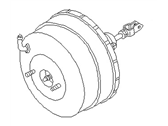
- Q:How to test the functionality of a Brake Booster on Nissan 300ZX?Posted by Ramesh N.A:A vacuum servo unit together with a vacuum hose is considered to be an essential part of the brake hydraulic circuit with the help of vacuum generated from the intake manifold. The communication is made to the hydraulic master cylinder through the servo unit, through which the piston rod of the servo unit will act as the pushrod of the master cylinder. The design of the controls makes sure that the assistance is offered in all cases; and in releasing the brake pedal, vacuum is created in the rear chamber while all airflow passes through a small air cleaner. Ordinarily, the vacuum servo unit does not seize up and thereby require replacement unless the mileage to a car is very high. After engaging the vacuum servo unit, to check whether the unit functions properly, apply the brake pedal severally while seeing to it that the car moves the same distance as it did the first time. Specifically, when the engine is started with the pedal fully pushed down, the described pedal should have a slight downward movement. Pressing the brake pedal and shutting the engine off must see the brake pedal stay in the pressed position for about half a minute unchanged.Answered by Nissan Parts Specialist Jorge / Jun 14, 2023
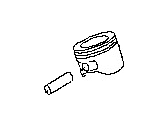
- Q:How to properly install piston rings and assess piston condition during maintenance on Nissan 300ZX?Posted by Alliyah M.A:Using a piston ring installation tool, carefully remove the rings from the pistons without nicking or gouging them. Scrape all traces of carbon from the crown of the piston using a hand-held wire brush or fine emery cloth after the majority of deposits have been removed. Avoid using a wire brush mounted in a drill motor, as it can erode the soft piston material. Utilize a piston ring groove cleaning tool to eliminate carbon deposits from the ring grooves; if unavailable, a piece broken off the old ring can suffice, ensuring no metal is removed and the sides of the grooves remain undamaged. After cleaning, use solvent to clean the piston/rod assemblies and dry them thoroughly. If the pistons show no excessive damage or wear and the engine block isn't rebored, new pistons may not be necessary, as normal wear appears as even vertical lines and slight looseness of the top ring. Inspect each piston for cracks around the skirt, pin bosses, and ring lands, and look for scoring, scuffing, holes, or burned areas on the piston crown, which may indicate overheating, abnormal combustion, preignition, or detonation. Corrosion evidenced by pitting suggests coolant leakage into the combustion chamber or crankcase, necessitating correction of the underlying issue. Measure the piston ring side clearance by placing a new piston ring in each groove and using a feeler gauge to check the gap, ensuring to compare readings with specified clearances; excessive clearance indicates the need for new pistons. For piston-to-bore clearance, measure the cylinder bore and piston diameters, subtracting the piston diameter from the bore diameter to compute clearance, and compare with specifications; if greater, rebore the block and install new oversize pistons and rings. Assess piston-to-rod clearance by twisting the piston and rod in opposite directions; noticeable play suggests excessive wear, necessitating replacement of the assemblies. Finally, check connecting rods for cracks and damage by temporarily removing rod caps, inspecting bearing surfaces for nicks or scratches, and after checking, replace old bearings and secure the caps.Answered by Nissan Parts Specialist Anildo / Aug 06, 2022
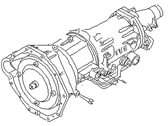
- Q:How to properly change the transmission oil on the Transmission Assembly of a Nissan 300ZX?Posted by Alisha M.A:Drive the vehicle for 15 minutes in stop-and-go traffic to warm the oil in the case, then raise it and secure it on four jackstands. Position a drain pan with at least a 5-pint capacity, along with rags and newspapers, under the car, and use a 1/2-inch drive ratchet wrench with an extension to remove the drain plug located on the underside of the transmission case. If the plug is not too hot, it can often be unscrewed by hand after a few turns; otherwise, use the wrench and let the plug drop into the pan for retrieval once the oil cools. Allow ample time for the oil to drain, and if a magnetic drain plug is present, inspect for metal bits that may indicate excessive wear on gear components. If no magnetic plug is available, check the bottom of the drain pan for any metal debris after the oil has cooled. Once all lubricant has drained, clean the drain plug and reinstall it, tightening to the specified torque. Remove the oil inspection/fill plug on the left side of the transmission and fill it with the appropriate amount and grade of lubricant using a hand pump or syringe until the level reaches the bottom edge of the inspection plug hole. Replace and tighten the filler plug to the specified torque, then remove the jackstands and lower the vehicle. After driving, check the drain and filler plugs for any signs of leakage.Answered by Nissan Parts Specialist Javi / Oct 27, 2023